What happened (as reflected in the Letters-to-the-Editor section)
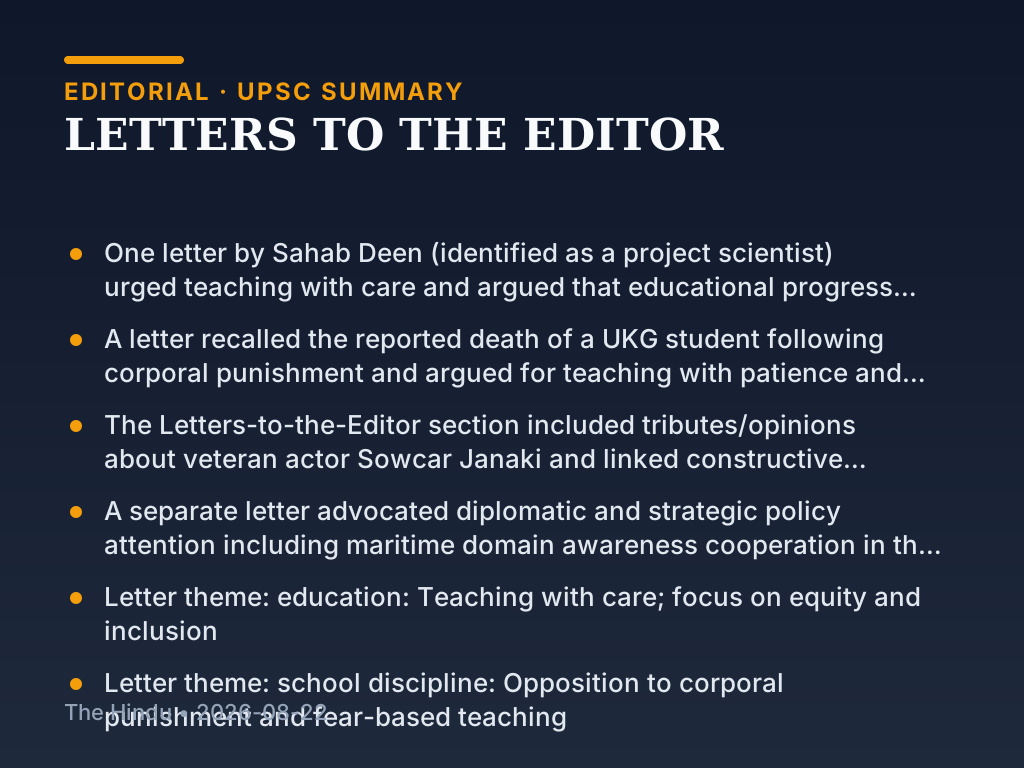
The Letters-to-the-Editor section published multiple submissions on education and child upbringing ethics. One submission emphasized teaching with care and argued that educational progress should focus on equity, inclusion, accessibility, and quality. Another submission recalled the reported death of a UKG (Lower Kindergarten) student following corporal punishment and used that case to argue that schools and caregivers must teach with patience and compassion rather than fear or physical punishment. Other submissions included tributes/opinions about veteran actor Sowcar Janaki, and a submission urging attention to diplomatic and strategic policy themes, including maritime domain awareness cooperation and related trade/energy agreements.
Background and earlier position (what the topic typically involves)
Within child-rights and education ethics discussions, the core expectation is that children should learn in safe, non-violent environments and that schools should support children’s dignity, inclusion, and access. Corporal punishment debates typically treat physical punishment as harmful both to immediate safety and to long-term learning and wellbeing. Separate from child-safety themes, education letters also often highlight inclusion and accessibility as practical requirements for equal learning outcomes.
What changed now (what the letters add to the public conversation)
The letters add two specific emphasis points for public understanding of education ethics: (1) a values-and-practice framing (teaching with care, patience, compassion rather than fear), and (2) a child-protection framing anchored in a tragic, reported case of a UKG student’s death after corporal punishment. By combining these, the letters push the reader to connect classroom pedagogy and school discipline practices with child-rights protection duties, not treating them as separate issues. The letters also broaden the education discussion to equity, inclusion, and accessibility as targets of “educational progress.”
Related current affairs
- Beyond the red pen: How assignments can be converted into a socio-economic asset
- Gen Alpha protests: Oppn. terms U.P. govt.’s checklist for schools an “eyewash”
- Pune tribal students’ hunger stir enters 9th day; two hospitalised
- Can free public technology break the private coaching industry?
- Higher education faces three urgent challenges
- State clears Bill to cap 7.5 lakh school fees; 26,000 employees to benefit (captioned as State clears Bill… )