What happened: school assignments redesigned as socio-economic learning assets
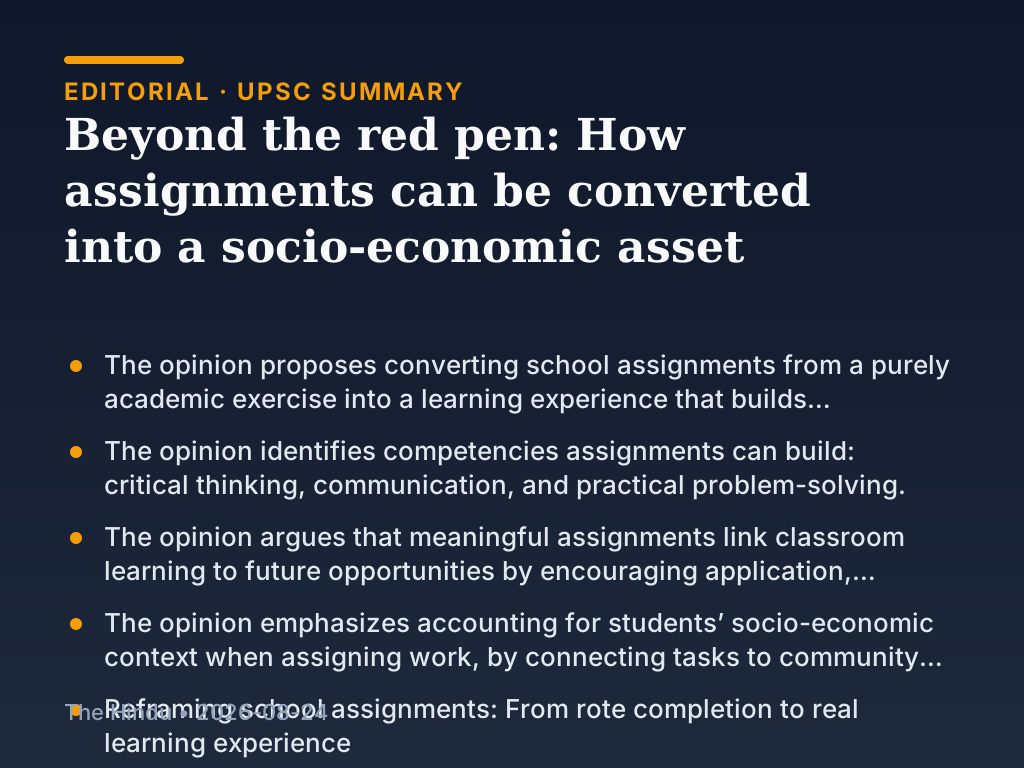
A The Hindu opinion argues that school assignments should stop being treated only as academic exercises for checking completion. The proposed change is to convert assignments into learning experiences that build skills with real-world value. This matters because assignment design affects student motivation and learning outcomes.
The opinion highlights three linked goals for redesigned assignments: skill building through competencies such as critical thinking, communication, and practical problem-solving; real learning actions such as application of concepts, reflection, and learner ownership; and equity through context by considering students’ socio-economic context and connecting tasks to community needs or everyday life.
Background and earlier position: completion-focused homework and unequal conditions
Many classroom practices treat assignments as homework that students complete to prove they received classroom teaching. When assignments mainly test reproduction of content, students may focus on “finish and submit” rather than practising skills.
Socio-economic differences can add an equity problem. Students may have different time, support, and learning environment at home. When assignment requirements are not adapted to these differences, the same assignment can create unequal learning conditions and unequal outcomes across students.
Related current affairs
- Fixing exam system won’t be enough! Bigg(er) is the answer
- LETTERS TO THE EDITOR
- Gen Alpha protests: Oppn. terms U.P. govt.’s checklist for schools an “eyewash”
- Pune tribal students’ hunger stir enters 9th day; two hospitalised
- Can free public technology break the private coaching industry?
- Higher education faces three urgent challenges