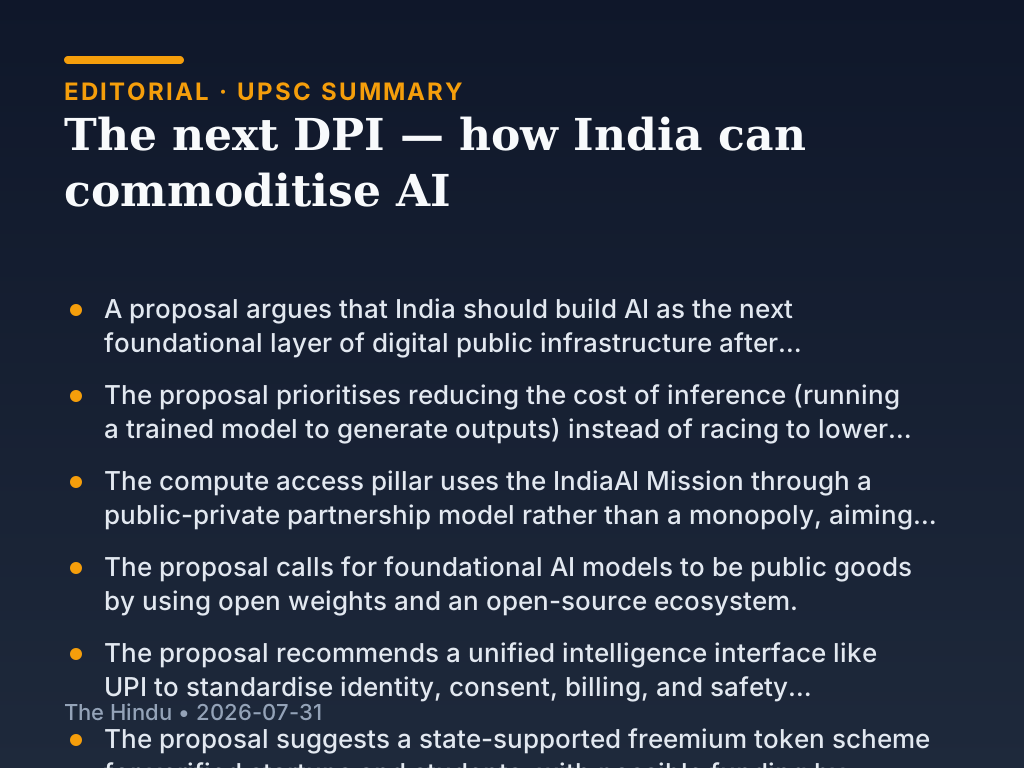
What happened: a shift from identity, payments, and data to AI as a “foundational layer”
A public-argument proposes that India should treat artificial intelligence (AI) as the next digital public infrastructure layer, after Aadhaar (identity), UPI (payments), and DEPA/Account Aggregator (data). The core action proposed is to design AI so that multiple systems can work together through common standards and mechanisms—rather than letting AI applications remain isolated and proprietary.
Background and earlier position: how India made digital services scalable and cheap
The argument links India’s earlier digital public infrastructure advantage to network economics and competition. In payments and identity, interoperability helped create demand and scale, which pushed unit costs down and enabled broad access.
The argument also recalls a spectrum of “state enabling conditions” where the state supports the conditions for market-driven price reductions—for example, releasing spectrum and creating demand shocks. The proposed lesson is that markets can bring costs down when interoperability and enabling conditions exist.
What changed now: focus shifts from “training AI” to “making AI usage inexpensive”
Related current affairs
- Better learning, better outcomes: an AI tutor for every child in India
- India calls for global tech collaboration as BRICS meet begins
- DARPG organises 20th National e-Governance Webinar on Government Process Re-engineering for Digital Transformation
- Can free public technology break the private coaching industry?
- BRICS ICT panel: India highlights Digital Public Infrastructure (DPI) and population-scale digital rails for global public services
- 12th BRICS Communications Ministers Meeting to be held on 21 August 2026