What happened (claims in the opinion)
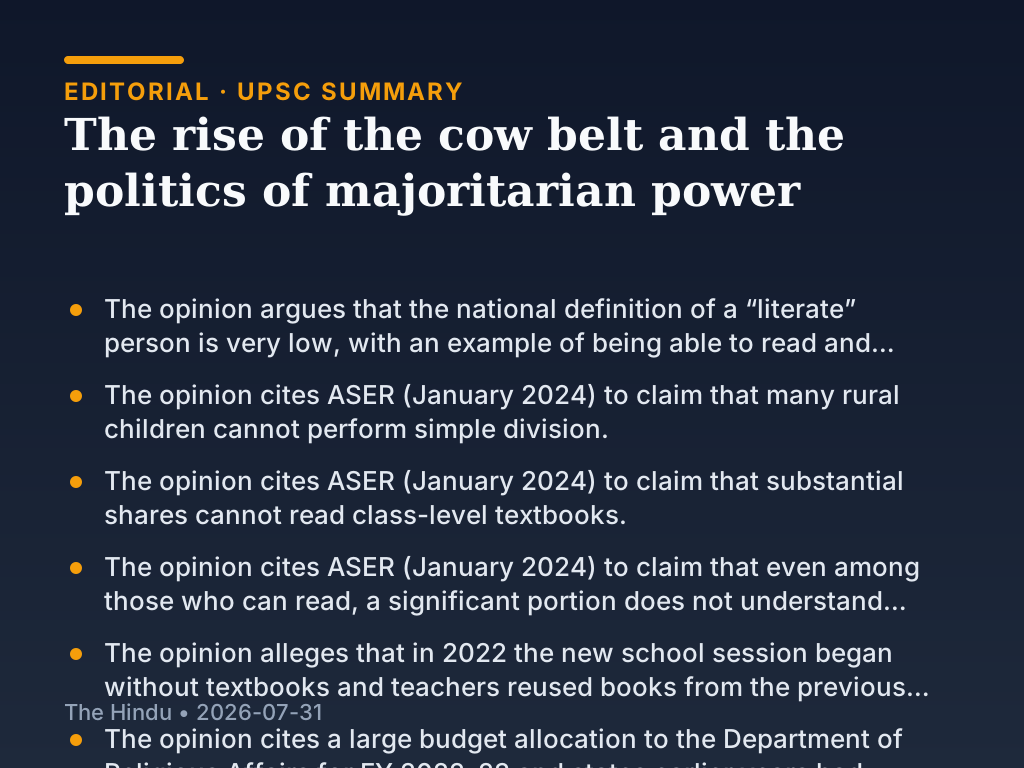
A The Hindu opinion argues that Uttar Pradesh and Bihar have remained weak in foundational education and learning outcomes. The opinion claims that headline literacy numbers can mislead because India’s national definition of a “literate” person is low.
The opinion cites ASER (January 2024) to argue that many rural children struggle with basic numeracy and reading comprehension. The opinion also alleges education delivery failures such as a lack of textbooks at the start of a school session in 2022.
The opinion compares education-related gaps with what it describes as higher spending priorities for religious affairs, and it links these patterns to a politics of religiosity tied to the “cow belt.” It further connects the debate on delimitation with concerns about electoral representation and majoritarian power.
Background and earlier position (education, data, and representation)
The opinion frames the literacy issue as a measurement problem. It argues that literacy labels can rise even when foundational skills are weak, using Uttar Pradesh’s literacy increase between 1951 and 2011 as an example.
Related current affairs
- How can States use disaster funds for heatwaves?
- The Sixteenth Finance Commission risks moving away from its core mandate of acting as an equalising force within the federation
- 15th Finance Commission grants to Panchayati Raj institutions for FY 2021-26; status of devolution and eGramSwaraj/online fund transfers
- National Workshop of State Panchayati Raj Ministers Deliberates on Effective Implementation of Sixteenth Finance Commission Recommendations
- Union Minister Shri Rajiv Ranjan Singh to Chair National Workshop of State Panchayati Raj Ministers on Sixteenth Finance Commission Recommendations in New Delhi, Tomorrow