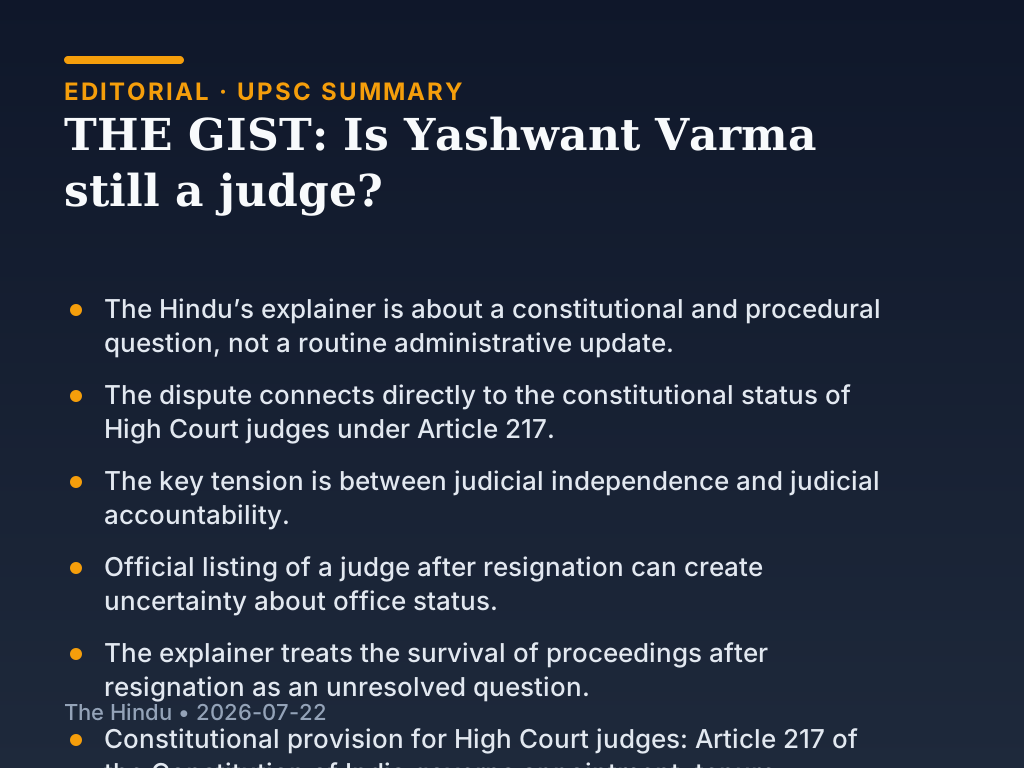
A High Court judge’s resignation has triggered a constitutional question on judicial office, resignation procedure, and pending accountability proceedings. The Hindu’s explainer focuses on Yashwant Varma and asks whether resignation by a judge ends office immediately or only after formal acceptance, and whether proceedings survive after resignation.
What the explainer highlights
The explainer notes that three months after Yashwant Varma’s resignation, his name is still shown as a sitting judge by the Allahabad High Court and the Union Department of Justice. It then raises two linked questions: whether a judge has a power to resign at will, and whether proceedings can continue if the judge is found guilty of charges.
Why the question matters
The issue sits at the intersection of judicial independence and judicial accountability. For UPSC, the constitutional importance lies in understanding how a judge leaves office, which authority is involved, and whether resignation can interrupt or end institutional proceedings.
Key constitutional context
Related current affairs
- Supreme Court statement says allegations against sitting judge must follow institutional mechanism
- Conviction after 34 years: how Sajjan Kumar dodged law
- Proceedings against Justice Varma likely to continue as motion moved before the House
- Explained: Criminalising the judiciary’s contempt; how contempt changes affect courts
- Prime Minister marks seven years since abrogation of Articles 370 and 35(A)
- Karnataka HC slams Civil Judge involved in load rage incident, orders probe against him