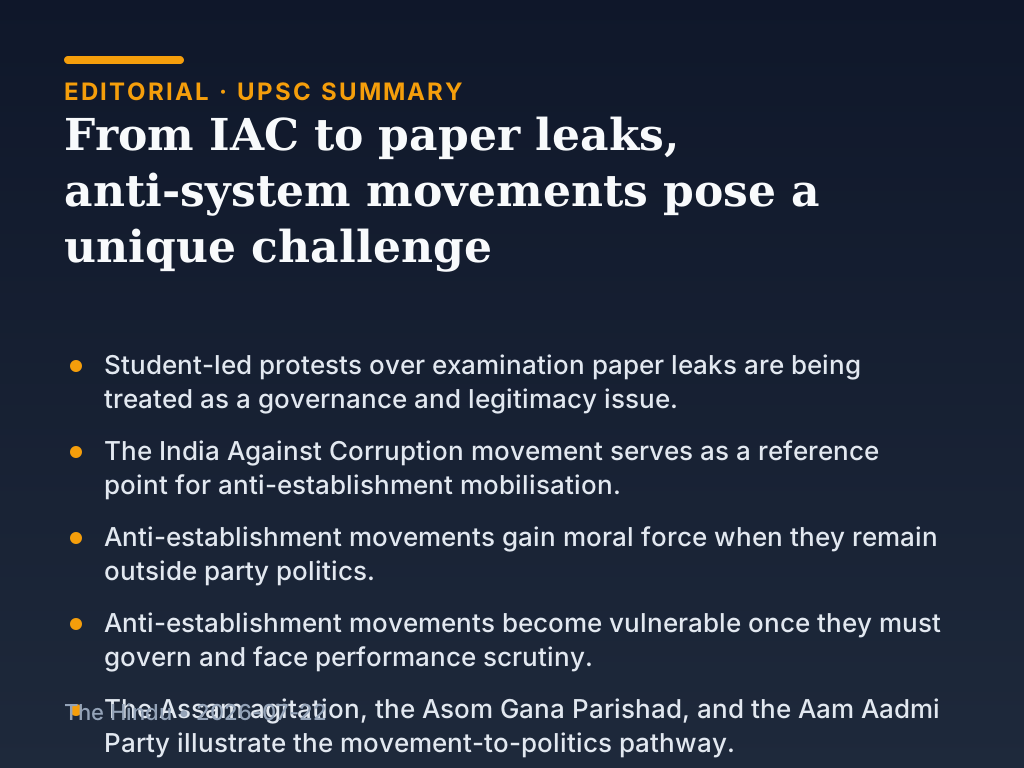
Student-led protests over examination paper leaks have become a governance test for the Union and State governments. The Hindu editorial argues that the protests matter not only because of the leaks themselves, but also because anti-establishment movements can erode political legitimacy when they appear to expose a deeper failure of the system.
The Hindu editorial compares the current agitation with the India Against Corruption movement. It says corruption allegations turned into a symbol of governance failure during the later years of the Manmohan Singh government, and recurrent paper leaks now test the BJP-led government’s claims of efficient and transparent governance.
Related current affairs
- An education system’s collapse, young India’s trauma
- Protesting students are not terrorists, Modi must apologise to them: Rahul
- Bihar turning police into a ‘weapon’ to evade accountability, says Rahul
- JMI admission lapses: protest site cleared, 4 students suspended
- Maho launches yatra for recruitment exam reforms in Jharkhand
- Mann’s wife sends legal notice to former Punjab & Haryana High Court judge over ‘bribe’ allegation