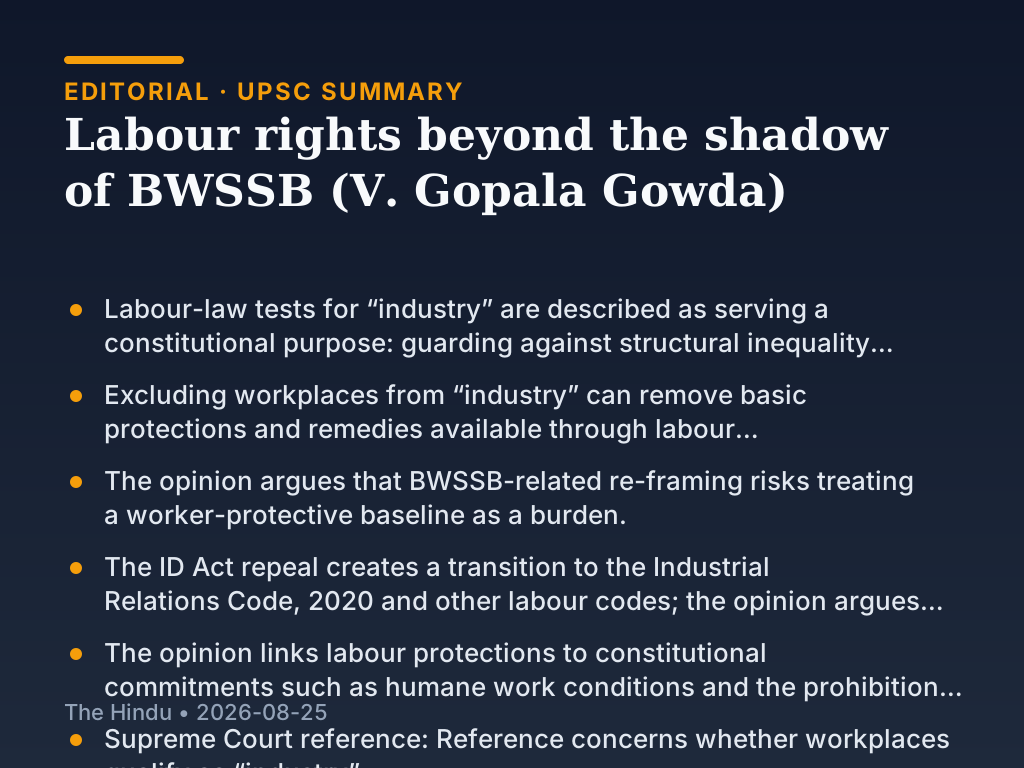
What happened: labour-law “industry” tests and the worker-protection concern
A Supreme Court reference on the meaning of “industry” in labour law is discussed in the context of labour rights. The central concern is that labour-law coverage rules for “industry” serve a constitutional purpose: preventing structural inequality between capital (employers) and labour (workers).
The opinion argues that if workplaces are excluded from “industry,” workers can lose access to remedies and protections that are normally available through labour courts/tribunals. In plain terms, narrow definitions can weaken the practical ability of workers to claim basic rights.
Background and earlier position: BWSSB and the “worker-protective baseline”
The opinion refers to a legal line connected to BWSSB (Bangalore Water Supply and Sewerage Board) and describes BWSSB-related re-framing as an attempt to redefine labour-law coverage. The opinion’s reasoning is that such exclusions risk treating a worker-protective legal baseline as a burden.
The opinion argues for the opposite baseline interpretation: the worker-protective legal baseline exists to correct an imbalance in bargaining power between employers and workers, not to penalise legitimate employment relations.
Related current affairs
- The top court’s treatment of BWSSB highlights the enduring anxiety over the scope of labour protection
- Cong. flags concerns over SC’s ruling on ‘industry’ definition
- Trade unions sound the alarm over Supreme Court judgment on the definition of industry
- The Supreme Court should not have discarded a workable test on ‘industry’
- Contributors and attribution: V. Gopala Gowda / Maitreyi Krishnan / Gargi Sridharan / Basit Abdullah / V. Gopala Gowda
- Wipro’s onboarding delay: IT rights body writes to Minister