What happened: education letters raised concerns about AI-assisted learning
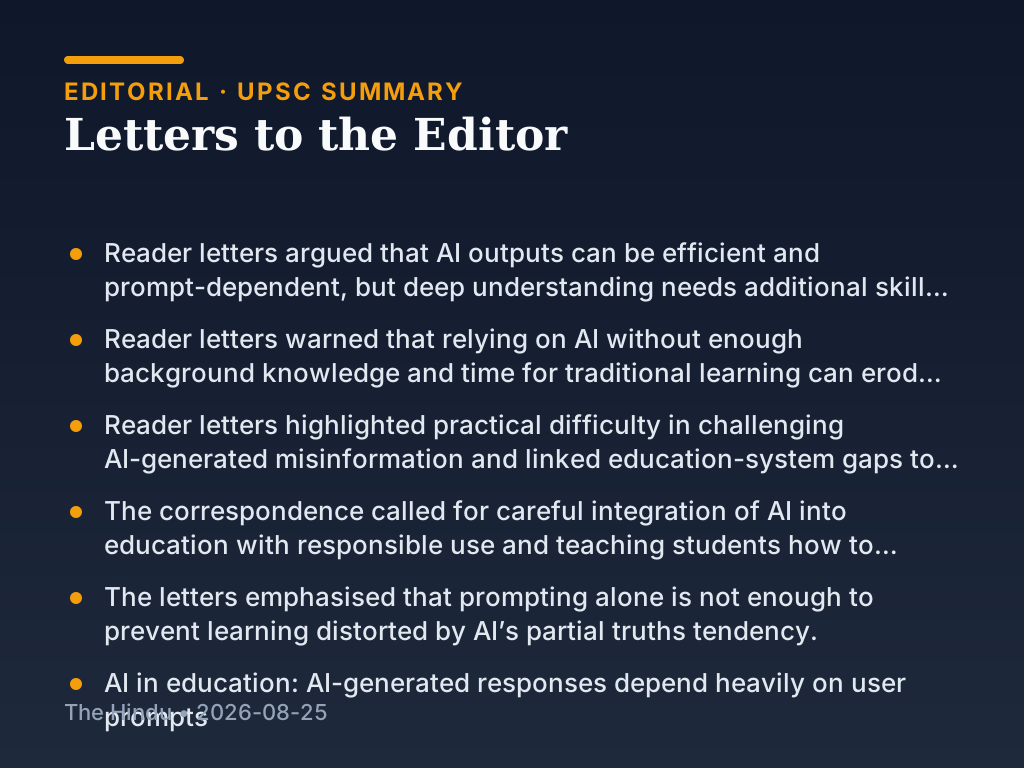
A Letters-to-the-Editor page published reader responses related to education and AI-assisted learning. One set of comments criticised an approach to AI in education described elsewhere, arguing that AI can generate efficient answers and that prompting can change response quality. However, the letters stressed that learners and teachers need additional skills—especially reflective capability—to evaluate AI output, detect misinformation, and avoid learning based on distorted or incomplete truths.
Another letter discussed the practical difficulty of challenging AI-generated misinformation. The same correspondence implied that broader education-system weaknesses are visible in outcomes such as vacant seats in undergraduate admissions.
Background and earlier position: AI can improve speed and phrasing, but risks remain
The letters drew a distinction between producing faster or more fluent responses and ensuring correct understanding. The letters argued that when learners and teachers lack sufficient background knowledge, and when classroom learning does not include time for traditional reading and learning, reliance on AI can reduce deep understanding.
In plain terms, the correspondence suggested that AI can influence what learners see and believe, so educational safeguards must focus on judgement, verification, and learning processes—not only on improving prompts or getting answers.
Related current affairs
- AI-assisted learning (letter to the editor)
- AI-assisted learning and the PRISM-X model bottleneck (letter excerpt)
- Education Minister marks NCERT’s 66th Foundation Day; highlights NEP 2020, curriculum frameworks and multilingual textbooks
- Better learning, better outcomes: an AI tutor for every child in India
- Not ‘delulu’ — an AI tutor for every child in India
- Editor’s note/columns promotion: ‘Not ‘delulu’ — an AI tutor for every child’