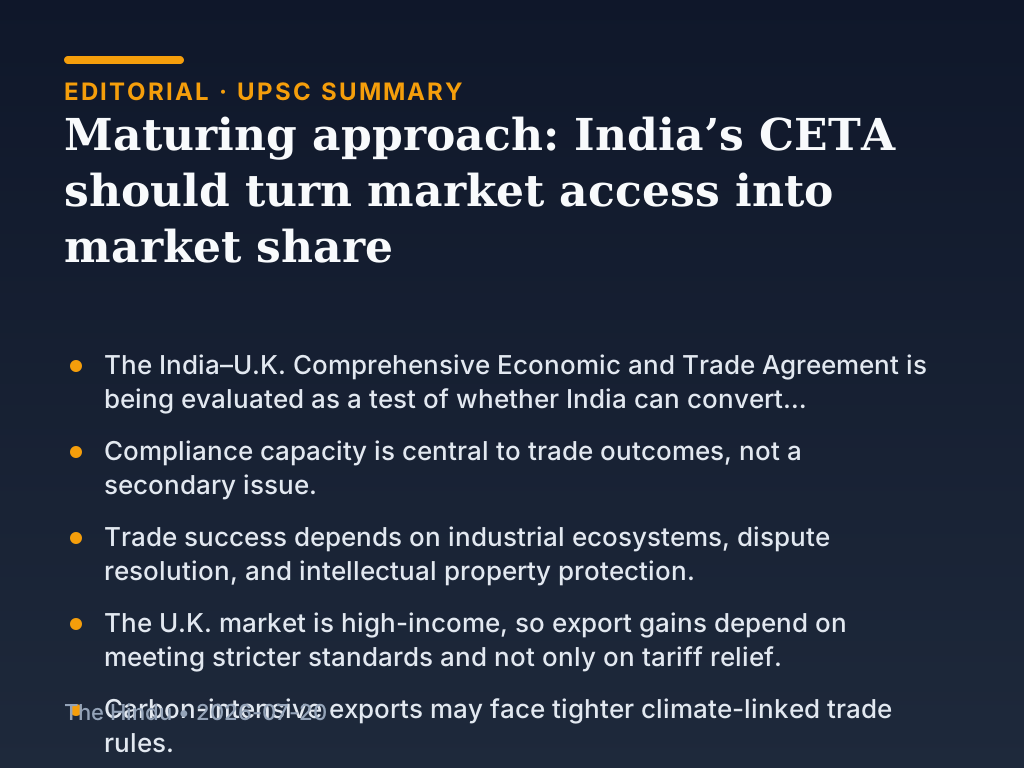
The India–U.K. Comprehensive Economic and Trade Agreement has been presented as a more balanced way of negotiating trade than India’s earlier free trade agreement experience. The Hindu argues that the agreement can improve India’s export competitiveness, but only if market access is converted into actual market share through stronger institutions, lower compliance costs, and better industrial capability.
What the agreement is expected to do
The central point is that tariff reduction is only the starting point. Indian exporters may gain duty-free access to a large share of the U.K. market, but the benefits will not be automatic because non-tariff requirements remain important.
The India–U.K. Comprehensive Economic and Trade Agreement can improve access to the U.K. market, but documentation burdens, compliance costs, and stringent non-tariff requirements still shape the final export outcome. The agreement works better when strong industrial ecosystems support exporters.
Background and earlier position
India’s earlier free trade agreement experience is used as a cautionary reference. India has often underutilised trade agreements because of low awareness, complex administration, and high compliance costs.
Related current affairs
- Government initiatives and measures to enhance trade preparedness and export competitiveness of India’s textile sector
- Government Expands FTAs and Export Promotion Measures to Diversify Export Markets
- Schemes to promote indigenous manufacturing of high-end and high-precision medical devices (PLI, Medical Device Parks, SMDI)
- Nine Years of GST: Simplifying Taxation, Strengthening India
- The bittersweet realities of the India-UK FTA
- A trade deal that tests India’s competitive confidence (India–UK Comprehensive Economic and Trade Agreement)