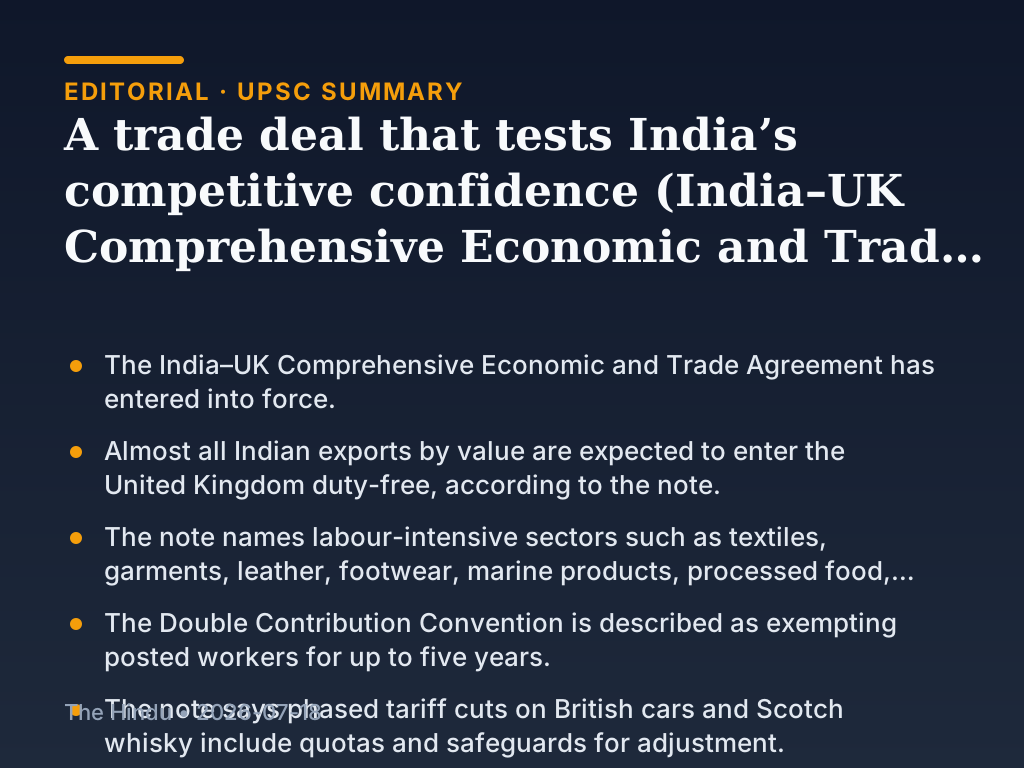
The India–UK Comprehensive Economic and Trade Agreement has entered into force and is being assessed as more than a market-access deal. The agreement matters because it expands export opportunities for Indian goods, changes tariff treatment for some British imports, and tests how confidently Indian firms can compete in a more open trade environment.
What changed now
The note says almost all Indian exports by value will enter the United Kingdom duty-free. It identifies likely beneficiaries as labour-intensive sectors such as textiles and garments, leather and footwear, marine products, processed food, engineering goods, and auto components.
The note also highlights a social-security provision for Indian professionals posted to the United Kingdom. The Double Contribution Convention is described as exempting such workers from duplicate contributions for up to five years.
Background and earlier position
India’s apparel exporters faced a tariff disadvantage in the United Kingdom because Bangladesh, Pakistan, and Cambodia could ship garments duty-free. The contrast explains why broader duty-free access matters for labour-intensive exports.
Related current affairs
- What are the gains from the India-U.K. trade deal (CETA)? How do the two countries benefit? What changes will the deal bring for Indian workers in the U.K.? What was left out of the deal?
- Maturing approach: India’s CETA should turn market access into market share
- What are the gains from the India-U.K. trade deal?
- India-U.K. FTA a boost for farmers and small,medium firms, says PM
- ‘Gold standard’ India-U.K. trade deal is coming into effect today
- Union Minister of Commerce & Industry to Lead Business Delegation to Spain, Belgium and Finland (13–17 July 2026)