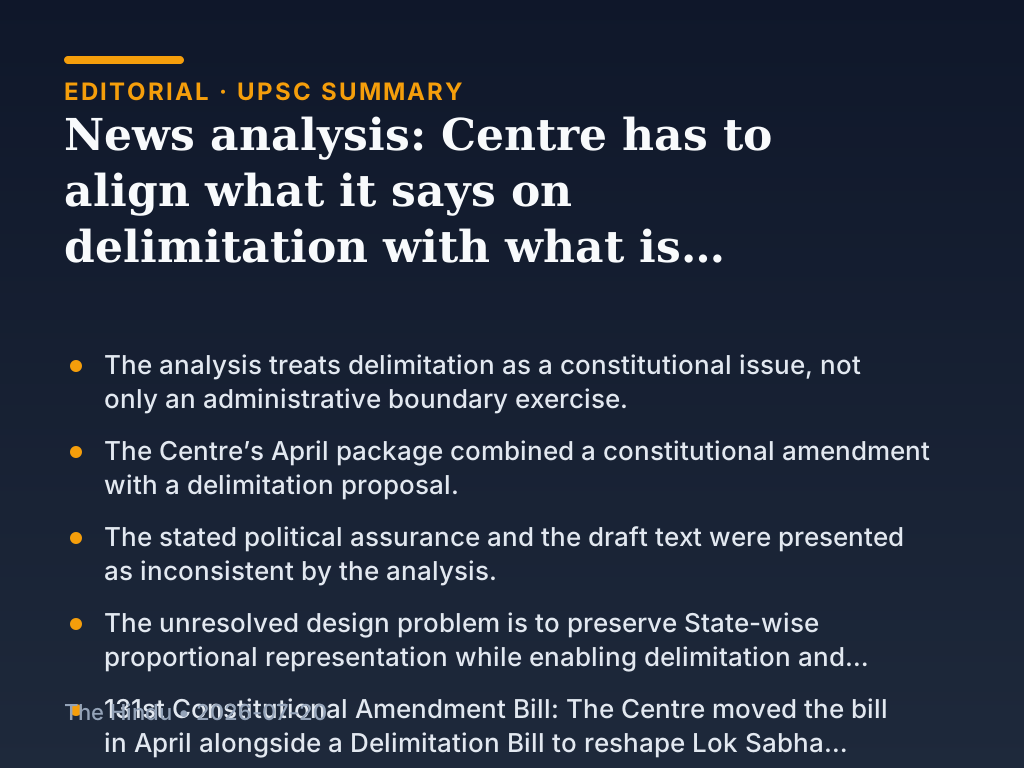
The Hindu’s analysis argues that the Centre must align its stated position on delimitation with the actual wording of the proposed constitutional changes. The central question is whether Parliament can redesign Lok Sabha representation, including delimitation and women’s reservation, while preserving each State’s existing proportional share of seats.
The issue became visible in April, when the Centre moved the 131st Constitutional Amendment Bill along with a Delimitation Bill. The package reportedly sought to increase Lok Sabha strength up to 850 seats, allocate additional seats among States using the latest Census, redraw constituency boundaries within States immediately, reserve one-third of Lok Sabha seats for women, and use the latest census-based approach for both seat allocation and delimitation.
Constitutional background
Articles 81 and 82 provide the constitutional basis for Lok Sabha representation and delimitation. The analysis argues that the current State-wise proportional distribution of seats is protected by these provisions, but that protection has a sunset linked to the first Census after 2026.
The constitutional scheme refers to three Census points for different purposes: the post-2026 Census for delimitation timing, the 1971 Census for State-wise seat proportions, and the 2001 Census for constituency population and boundary limits. The April package tried to collapse these separate references into a single “latest Census” formula.
What changed and what remains unresolved
Related current affairs
- The stakes in India’s delimitation debate
- DMK, TDP should uphold their legacy of ensuring fair delimitation, says Jairam Ramesh
- NDA renews push to muster numbers for delimitation Bill
- NCP(SP) MPs meet Modi, discuss ‘issues related to Maharashtra’
- THE GIST (summary box for the explainer)
- Raising LS strength to 815 will make it ineffective, says Karti