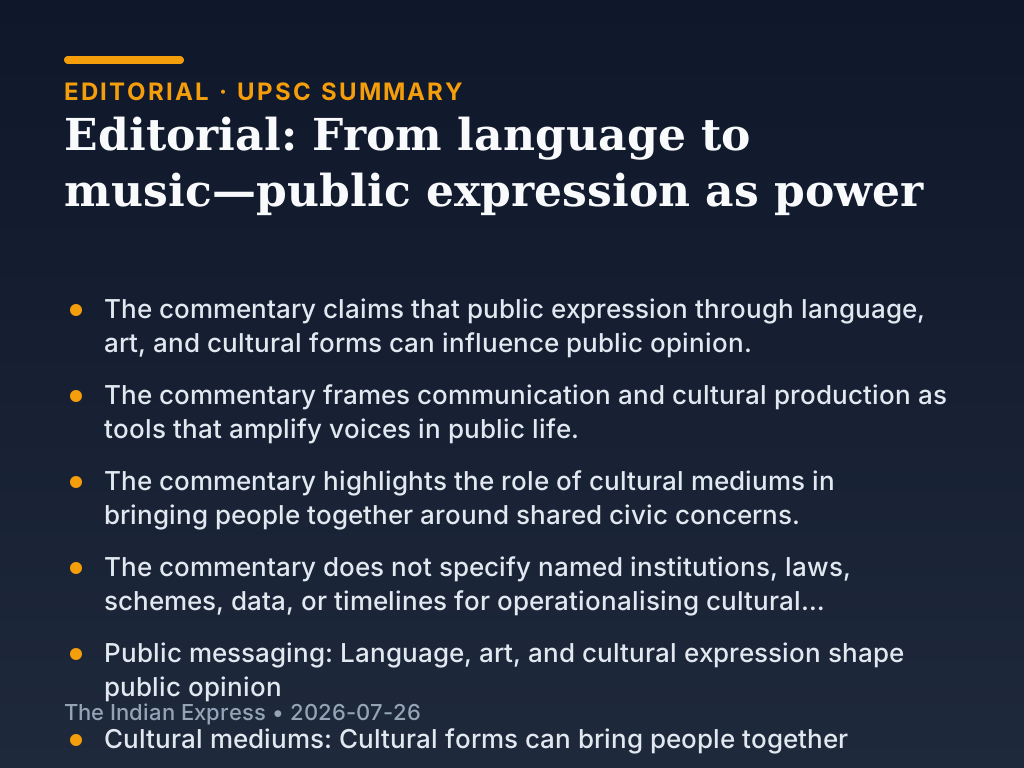
What happened (core claim about public expression)
The commentary advances the claim that public expression through language, art, and cultural forms creates social power. It argues that communication shapes public perception of issues and that cultural mediums can bring people together around shared concerns.
Background and earlier position (why culture and communication matter)
In public life, language and cultural expression work as shared symbols. Shared symbols help societies form common meanings, norms, and identities, which affects how citizens interpret events and decide what needs attention.
What changed now (focus shift in the framing)
The commentary’s framing treats communication as an active force rather than a neutral information channel. It presents cultural production as a way to amplify voices in public life and to influence how issues are understood and discussed over time.
Related current affairs
- IIMC confers MA in Public Communication & Governance on IIS Officer Trainees; new programme introduced
- Royal Stars (comic strip)
- Scanning/registration prompts (image-driven)
- Hindi page cover ad: PM Modi and Union scheme campaign (Kashmir/जियोन illustration)
- MLA Abhay Verma appointed govt.’s chief spokesperson