What happened
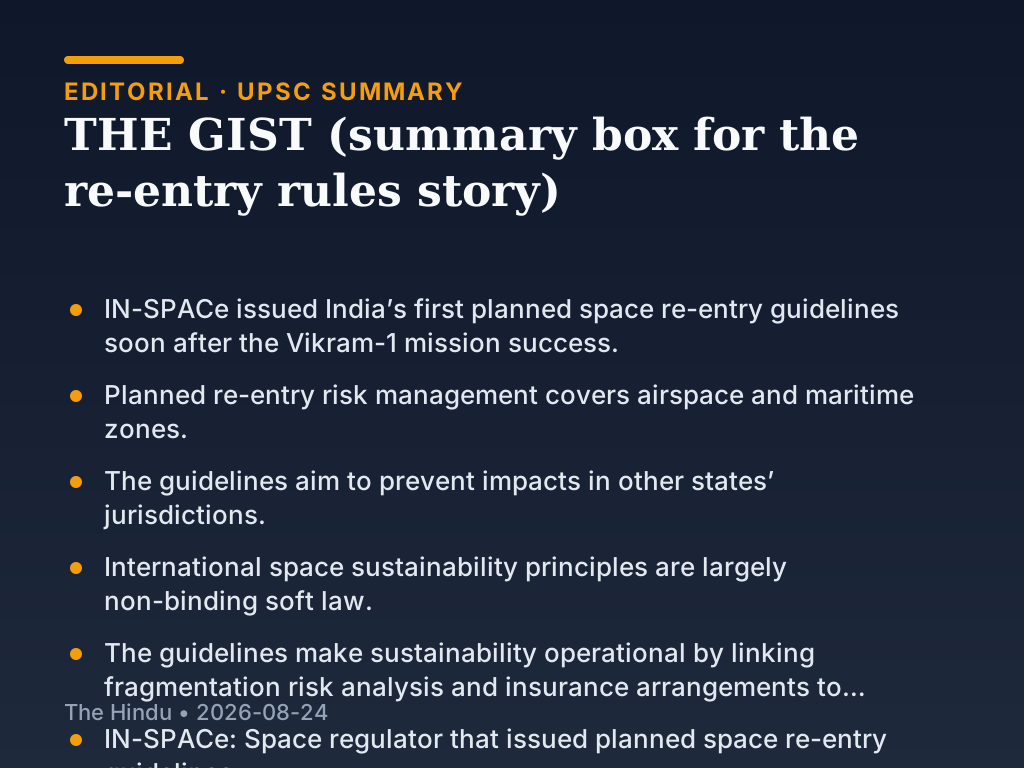
IN-SPACe, the Indian space regulator, issued India’s first planned space re-entry guidelines soon after the success of the Vikram-1 mission. The guidelines focus on safety during the return of spacecraft to Earth, especially the need to manage risks for airspace and maritime zones and to avoid impacts within other states’ jurisdictions.
Background and earlier position
Space sustainability principles exist at the international level, but many of them are “soft law” — meaning they guide behaviour without creating legally binding obligations by themselves. Because soft law is non-binding, states and regulators typically need national rules to make sustainability operational in real missions and real risk management processes.
For planned re-entry specifically, the governance challenge is that re-entering objects can create hazards if debris disperses unpredictably. Hazard mitigation therefore has to be tied to the operator’s ability to estimate where fragments could go and to arrange safeguards that cover losses.
What changed now
Related current affairs
- Global space norms find a firm footing in India’s new re-entry rules
- Despite reputation, India’s per-unit space launch cost highest
- Lok Sabha question: Antariksh Venture Capital Fund operational after SEBI approval; IN-SPACe contributions and first investments
- ISRO executes Collision Avoidance Manoeuvres; India advances space debris mitigation and tracking
- Flipping hard (BASE jumping)
- Learning the right lessons at the bank