What happened: BASE jumping is explained through its meaning and risk points
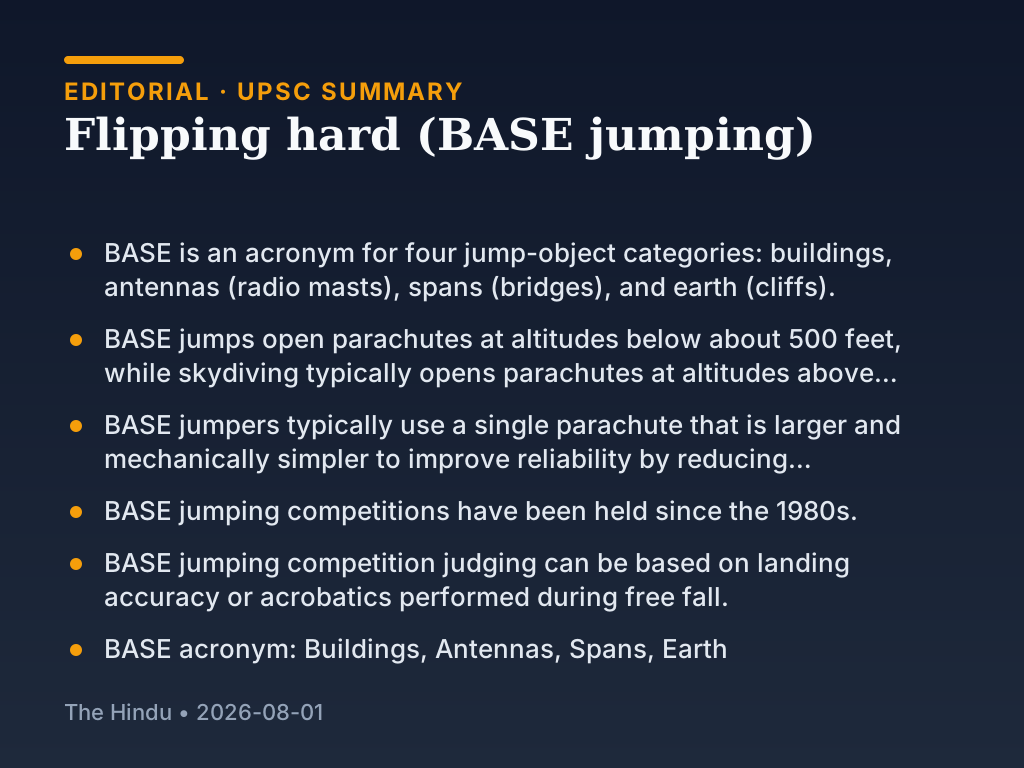
A study guide explains BASE jumping by defining “BASE” as an acronym for four jump-object categories: buildings, antennas (radio masts), spans (bridges), and earth (cliffs). The guide contrasts BASE jumping with skydiving and highlights why BASE jumping is hazardous: BASE jumps open parachutes at far lower heights than skydiving.
Background and earlier position: How BASE jumping differs from skydiving
The guide’s comparison with skydiving focuses on parachute-opening altitude and the knock-on effect on safety. It states that BASE jumping involves parachute opening at altitudes below about 500 feet, while skydiving typically opens parachutes at altitudes above about 2000 feet. Opening at lower heights reduces the time available to handle malfunctions or to correct problems.
The guide also explains an equipment design choice often used in BASE jumping: BASE jumpers typically use a single parachute that is larger and mechanically simpler. The guide links this choice to reliability by noting that using one parachute reduces the opportunity for troubleshooting.