What happened: a 2026 amendment connected to Vande Mataram, with a narrow criminal focus
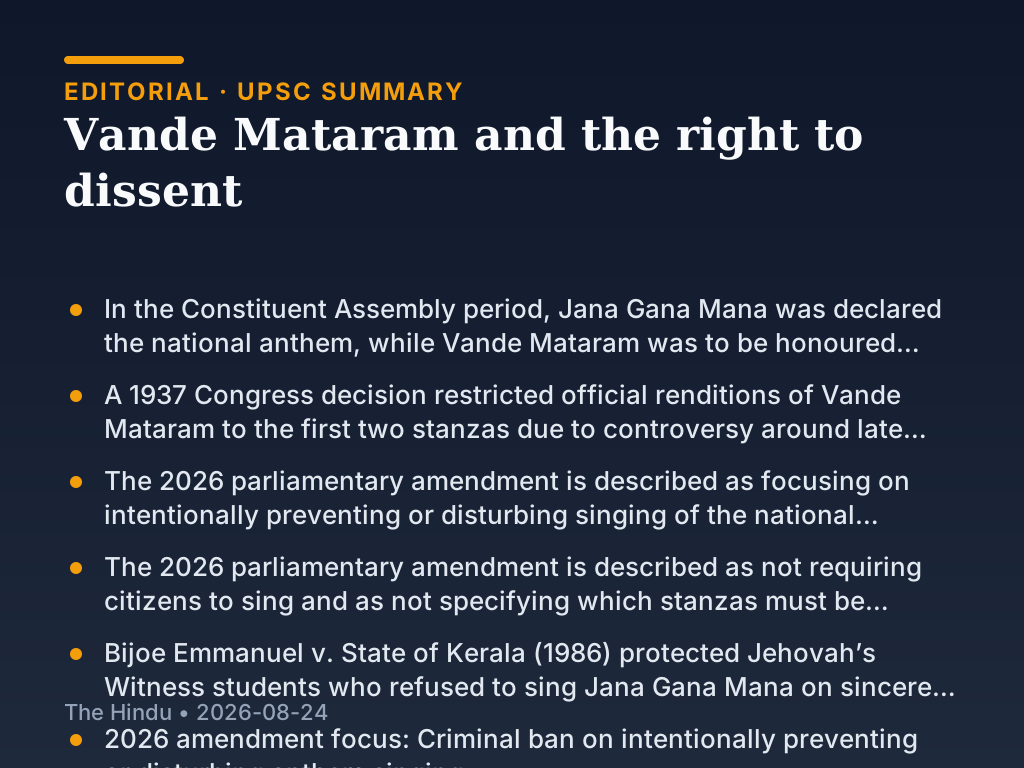
A 2026 parliamentary amendment connected to Vande Mataram is described as providing protection without creating an obligation for every citizen to sing. The amendment’s criminal focus is argued to target intentionally preventing or disturbing singing of the national anthem or a national song. The claim is that the amendment does not require citizens to sing, does not prescribe which stanzas must be sung, and does not mandate recitation of all stanzas.
On this interpretation, a citizen may remain silent or refrain from joining in provided the citizen is not disrupting other participants.
Background and earlier position: Constituent Assembly treatment differed for Jana Gana Mana and Vande Mataram
During the Constituent Assembly period, the national anthem status and anthem-like practice were not applied identically. Jana Gana Mana was declared the national anthem. Vande Mataram was to be honoured equally in status, but it was not made the anthem or a co-anthem.
Earlier political compromise is cited through a 1937 Congress decision that restricted official renditions of Vande Mataram to the first two stanzas. The stated reason is that later stanzas are more devotional and invoke Hindu goddesses, with historical controversy around those lines.