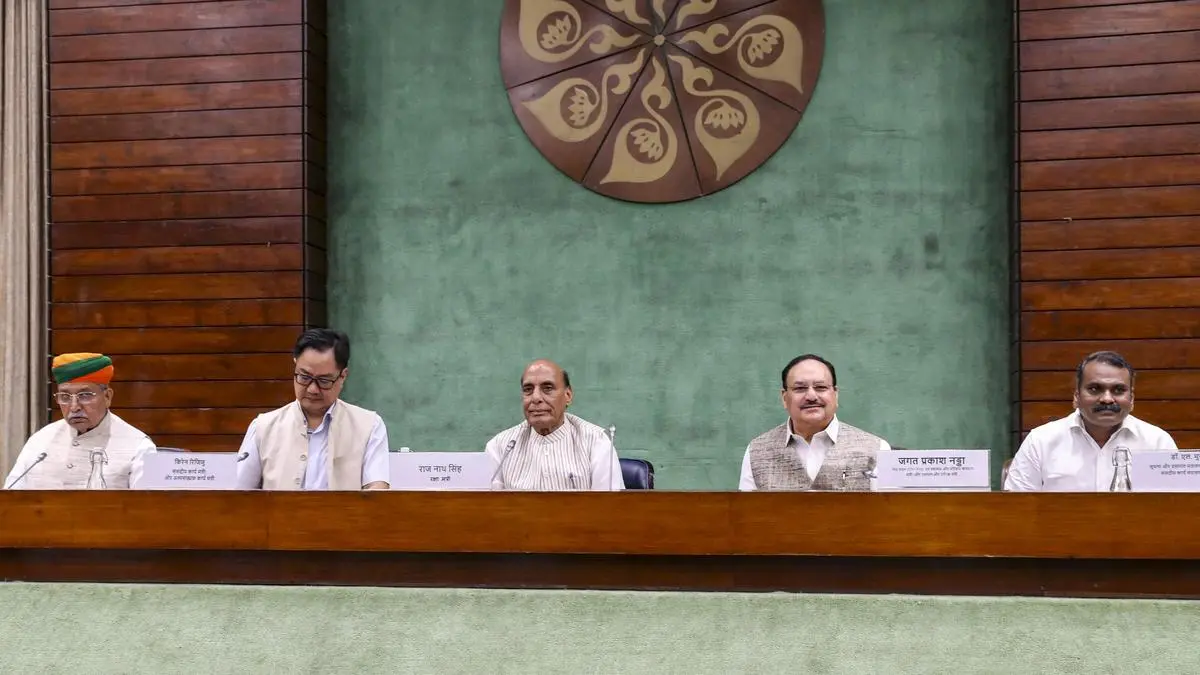
Opposition Members of Parliament raised the issue of the NEET paper leak and alleged theft linked to Ram Temple donation collections on the opening day of the Monsoon Session of the Lok Sabha. The House was repeatedly disrupted, showing how questions of examination integrity and public accountability can quickly become parliamentary flashpoints.
The development is important for UPSC because it links two recurring governance themes: the credibility of large-scale public examinations and the transparency of collection and handling of donations associated with religious institutions. The parliamentary setting also makes the issue relevant to questions on deliberative democracy and legislative accountability.
Why the issue matters
A paper leak in a national-level examination affects merit, fairness, and public confidence in recruitment and admissions. Allegations of theft from donation collections raise questions about internal controls, transparency, and audit mechanisms in institutions handling public trust and large cash flows.
Background and earlier position
NEET, or the National Eligibility cum Entrance Test, is a major medical entrance examination in India and has faced repeated scrutiny over exam security and irregularities. Parliament has also seen frequent disruption when Opposition parties seek discussion on governance failures, corruption allegations, or public distress issues.
Related current affairs
- Parliament adjourned for second straight day as Opposition protests over NEET leak and alleged police brutality (Monsoon Session)
- Opposition protests police action on students, Ram Temple donation theft
- Govt. ready for discussion on paper leak: Rijiju
- DMK reiterates demand to scrap NEET, accuses Centre of ignoring concerns of T.N.
- Govt. ready for discussion on NEET paper leak: Rijiju
- PARLIAMENT QUESTION: National Standards for Civil Service Training Institutions (NSCSTI) revised as NSCSTI 2.0