What happened
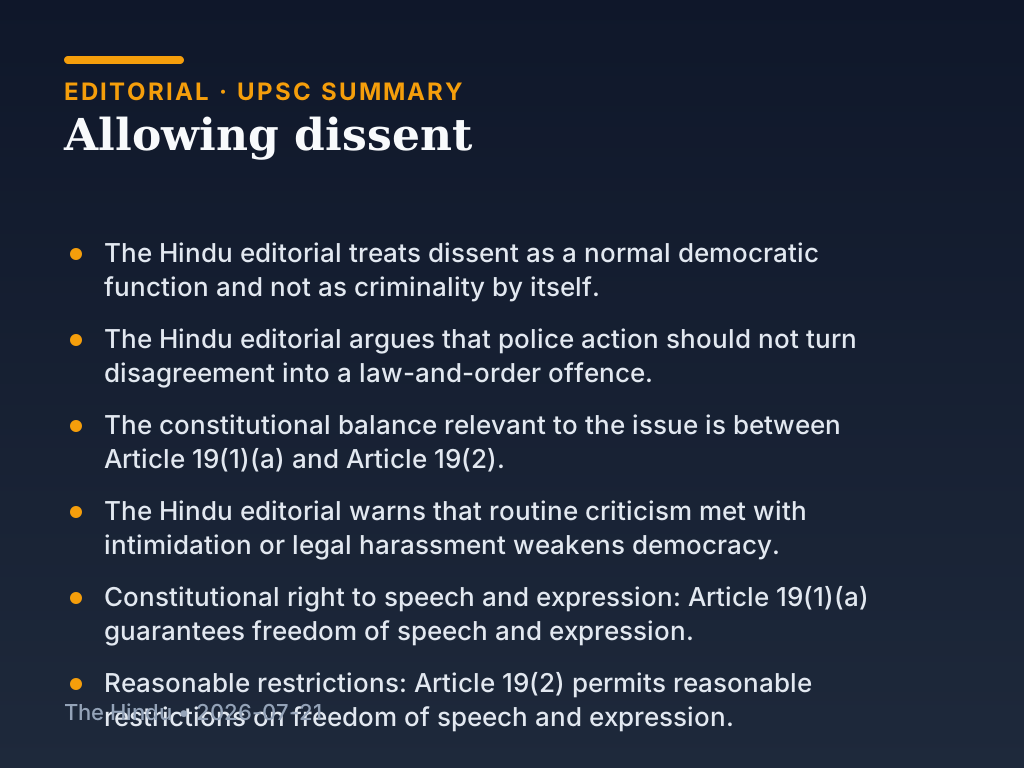
The Hindu editorial argues that dissent is a normal feature of democracy and that police action should not convert disagreement into a criminal matter. It says recent cases show a tendency to treat protest, criticism, and questioning of authority as a law-and-order problem.
Background and earlier position
In Indian constitutional law, Article 19(1)(a) guarantees freedom of speech and expression, while Article 19(2) permits reasonable restrictions in the interests of sovereignty and integrity of India, security of the State, friendly relations with foreign States, public order, decency, morality, contempt of court, defamation, and incitement to an offence.
The core concern is a familiar democratic balance: the State has a duty to maintain public order, but public order cannot become a blanket justification for suppressing peaceful dissent.
Related current affairs
- Small legal notices on civil liberties and protest rights
- Shouldn’t there be a law of dissent? (or similar op-ed/column heading)
- From Mohan Bhagwat, a lesson on dissent and democracy
- Hindutva supporter’s ‘shoot protesters’ jab triggers row
- Volunteers scan crowd for unwanted elements, police in plainclothes
- At CJI’s resurrected Jantar Mantar stage, the protesters of violence and dissent