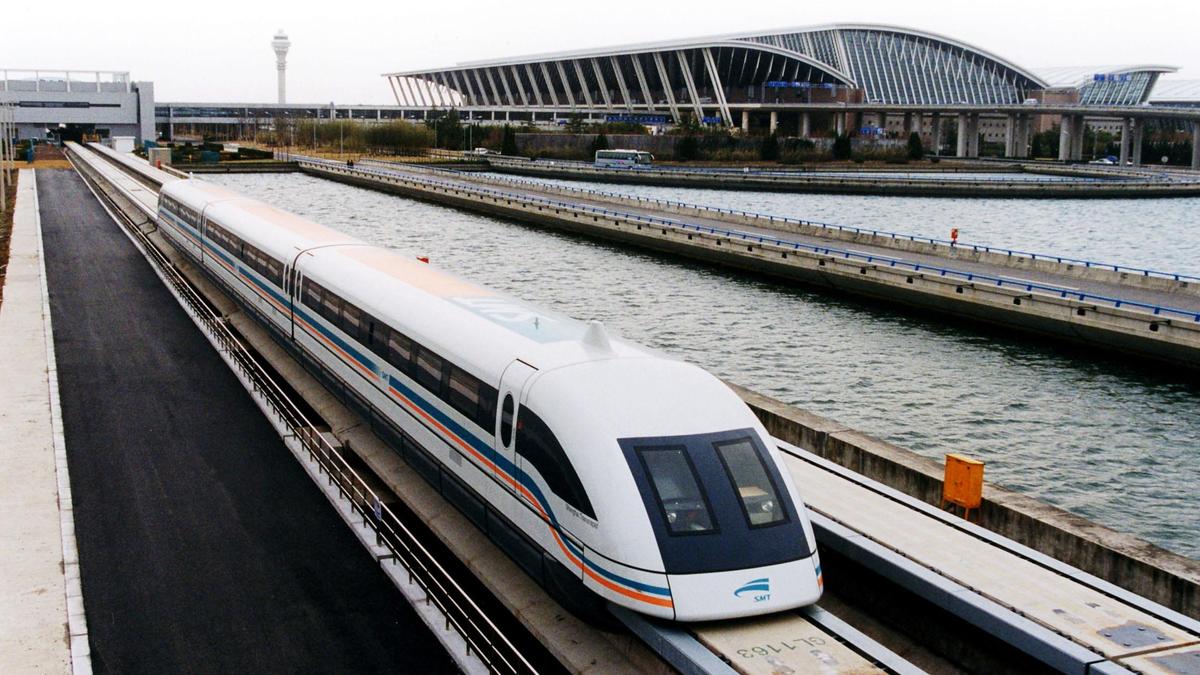
Magnetic-levitation, or maglev, trains are a high-speed rail technology in which magnets lift the train slightly above the guideway and propel it forward. The result is very low rolling friction, less wear, and smoother movement, but the system depends on specialised infrastructure and strong electronic control.
A The Hindu feature explains the basic working principle of maglev systems and why they can run faster than conventional rail. The train does not touch the track, so mechanical contact is removed and speed can rise much higher than in ordinary wheel-and-rail systems.
How maglev works
Maglev systems perform two main functions. First, the magnetic field creates lift, which raises the train above the guideway. Second, the same magnetic system provides propulsion, while electronic control regulates the field so that the train can accelerate, slow down, and remain stable.
Key features and limits
The feature says trial runs have shown speeds of more than 400 km/h, and future systems are projected to reach around 500 km/h. These speeds make maglev relevant for high-capacity, high-speed corridors, but the technology remains capital-intensive.
Related current affairs
- Physicist Deepak Dhar wins 2026 Dirac Medal
- Rollout of Weather Information Network and Data System (WINDS) for hyperlocal weather data under agriculture risk management
- Government enhances Haj 2026 welfare with better accommodation, medical support, insurance, and transportation
- Semiconductor talent development support in Tamil Nadu institutes
- Safeguards for ISRO
- E. Explained: Cigenting bacterium, what challenges remain in an anti-cancer pathway