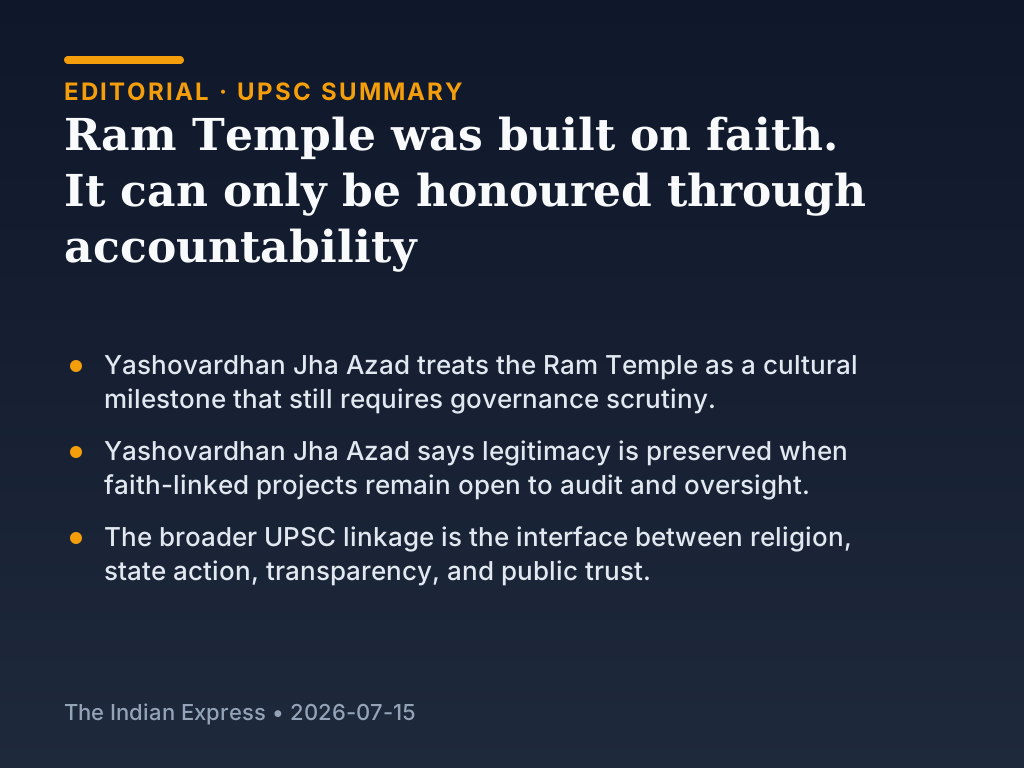
Yashovardhan Jha Azad argues that the Ram Temple should be viewed not only as a symbol of faith and national culture but also as a public project that must meet standards of transparency and accountability. The central question is whether institutions can protect public trust when religious sentiment and state action intersect.
The central claim is simple: faith does not reduce the need for scrutiny. Land use, financing, procurement, approvals, and administrative decisions connected with a large public or quasi-public project must remain open to oversight.
Related current affairs
- What the CTHURSSAY campaign ends in the age and India
- LETTER TO THE EDITOR: Paper leak law
- Yeah the kids are alright
- The youth have risen against authoritarianism (Letters to the Editor)
- Kerala suspends ADGP Ajith Kumar over probe tampering
- FCRA registration and compliance mechanism: eligibility, process, and financial discipline