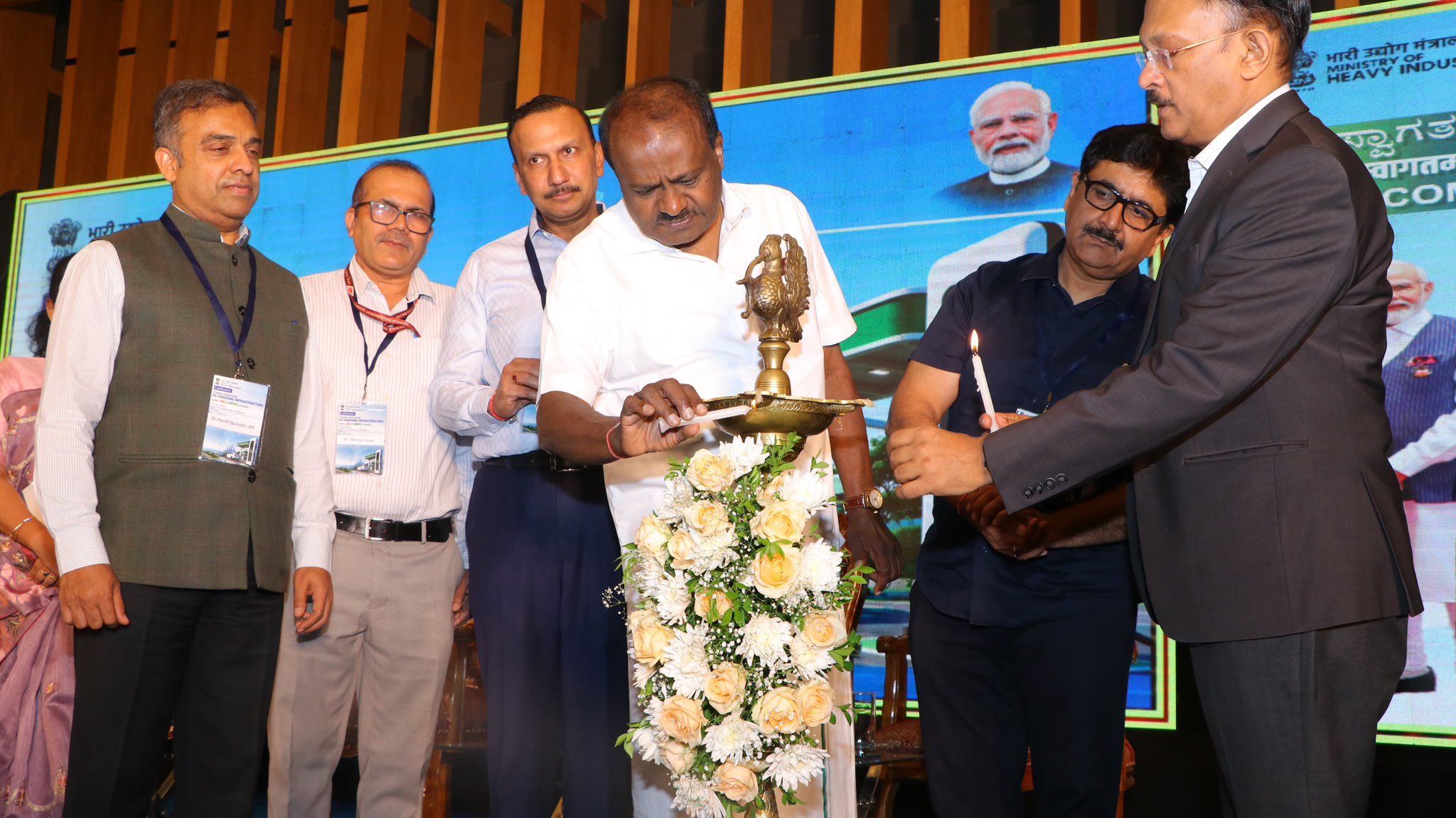
The Ministry of Heavy Industries has mapped India’s electric vehicle policy architecture through scheme-wise allocations, deployment figures, and adoption trends. The central takeaway is that India’s electric mobility strategy now combines demand incentives, domestic manufacturing support, charging infrastructure, and public transport electrification.
What existed earlier
India’s first large national push for electric vehicles came through the Faster Adoption and Manufacturing of (Hybrid &) Electric Vehicles in India (FAME India) framework. The ministry said FAME-II ran from 1 April 2019 to 31 March 2024 with budgetary support of ₹11,500 crore. The scheme gave demand incentives for electric two-wheelers, three-wheelers, and four-wheelers, and grants for electric buses and public charging stations.
The ministry also listed production-linked incentive support for the sector. The PLI Scheme for Automobile and Auto Component Industry in India was notified on 23 September 2021 with an outlay of ₹25,938 crore. The PLI Scheme for National Programme on Advanced Chemistry Cell Battery Storage was notified on 9 June 2021 with an outlay of ₹18,100 crore for a domestic manufacturing ecosystem for 50 GWh of advanced chemistry cell batteries.
What changed now
The Ministry of Heavy Industries said newer schemes have widened the policy scope beyond FAME-II. PM Electric Drive Revolution in Innovative Vehicle Enhancement (PM E-DRIVE) was notified on 29 September 2024 with an outlay of ₹10,900 crore. The scheme supports incentives for about 28.30 lakh electric vehicles, including electric two-wheelers, electric three-wheelers, electric trucks, electric buses, and electric ambulances.
Related current affairs
- FAME India Phase-II and related MHI schemes: progress in EV adoption and charging infrastructure
- FAME India Phase-II and other Government EV schemes in India
- PM E-DRIVE scheme: incentives, outlay, status and support for charging, batteries and e-mobility
- 88,209 EVs subsidized in Madhya Pradesh in FY 2025-26 under PM E-DRIVE scheme
- Roads Reimagined: The Rise of India’s Electric Vehicles Ecosystem
- PM E-DRIVE Scheme (Electric Drive Revolution in Innovative Vehicle Enhancement)