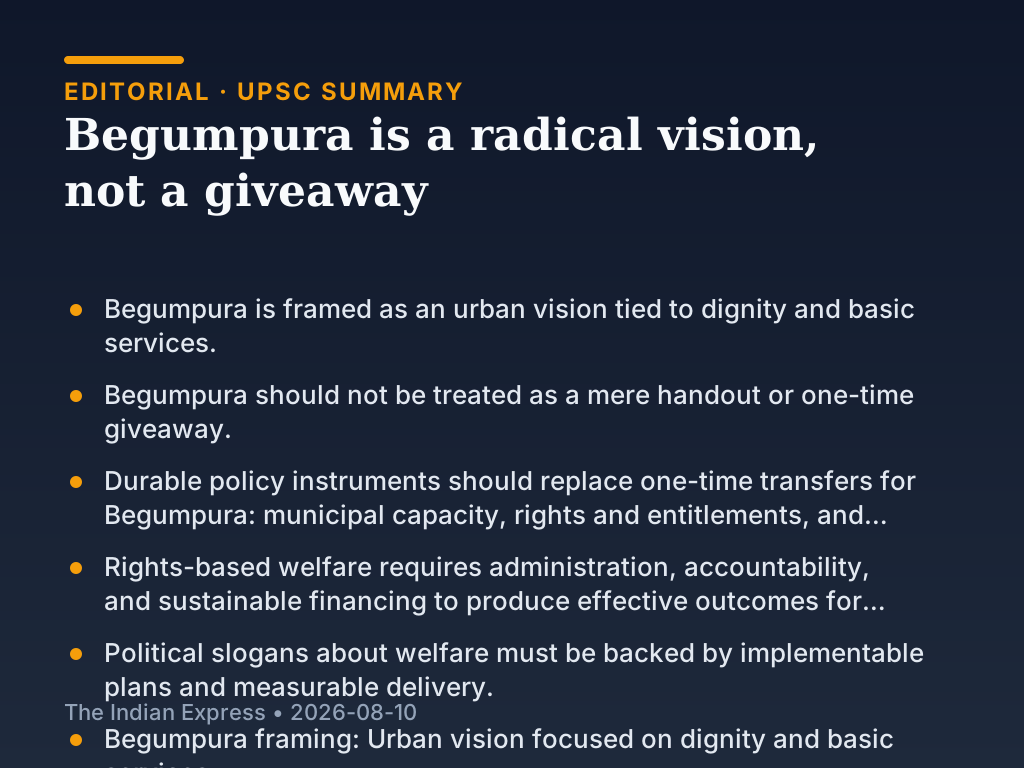
What happened: Begumpura framed as a dignity-and-services vision with an anti-handout warning
Begumpura is described as an urban vision that links city life with dignity and access to basic services. The core caution in the discussion is that Begumpura should not be treated as a simple giveaway (one-time handouts) that creates short-term satisfaction without delivering long-term outcomes.
The discussion argues that the Begumpura vision should be pursued through durable policy instruments that can keep delivering services over time. It focuses on administration (how services are actually run), accountability (how performance is checked), and sustainable financing (how funding continues instead of stopping after a transfer).
Background and earlier position: rights-based welfare needs delivery capacity
The Begumpura idea fits into a general welfare principle: rights-based welfare means residents should receive entitlements through a functioning delivery system. A rights-based approach is more than declaring benefits; it requires planning, implementation, and ongoing monitoring by government institutions—especially municipal bodies that run many urban services.
In practice, if welfare is delivered mainly through campaign-style transfers, administrative systems can weaken. Residents may face repeated uncertainty, service gaps, and low accountability because the government’s role shifts from service delivery to periodic distribution.
Related current affairs
- Begumpura is a radical vision, not a government model
- Begumpura is a radical vision, not a government policy intention
- Treat waterlogging as disaster, work on war footing: L-G to officials
- Look beyond social media, focus on nation-building, CM advises youth on I-Day
- Once upon a time in Lower Duck Pond
- PM SVANidhi scheme impacts: credit access, digital payments and socio-economic linkages