What happened: Gaganyaan thermal shield targets extreme re-entry heat
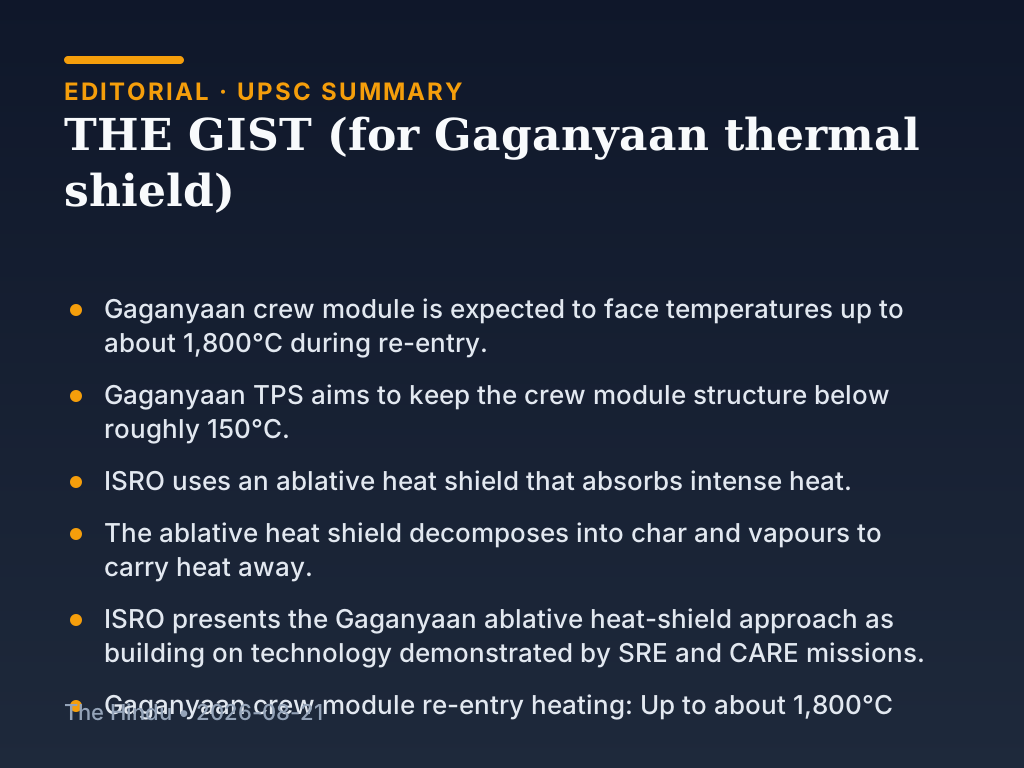
ISRO’s Gaganyaan mission uses a crew module thermal protection system (TPS) to manage the intense heating during atmospheric re-entry. The crew module is expected to face temperatures up to about 1,800°C during re-entry, while the TPS is designed to keep the crew module structure below roughly 150°C.
How ISRO’s heat-shield works (ablative concept) — what it rejects by design
ISRO chose an ablative heat shield, which is a heat shield material strategy where the outer layer is intentionally consumed to protect what is inside. In plain terms, the ablative layer: absorbs intense heat from re-entry conditionsdecomposes into char (a carbon-rich solid residue) and vapours (gases)carries heat away as decomposition products form and flow outwardBecause the ablative layer is designed to change and wear out, the approach limits the need for the crew module structure to directly withstand the full external heating load.
Background and earlier position: technology lessons from SRE and CARE
ISRO’s ablative heat-shield choice for Gaganyaan builds on technology demonstrated by two earlier missions mentioned in the explainer: SRE (SRE is cited as a demonstration of re-entry-related thermal/heat-shield behaviour)CARE (CARE is cited as a demonstration platform for relevant heat-shield technology)In this study note, the key continuity point is that the Gaganyaan TPS selection is not presented as a first-time, untested design; it is presented as an evolution based on prior demonstrated technology behaviour.
Related current affairs
- Explainer THE GIST: Gaganyaan thermal protection system
- How will Gaganyaan’s thermal shield protect the crew?
- Lok Sabha written reply: Progress on Gaganyaan human spaceflight mission and Bharatiya Antariksh Station timeline
- Opposition raises concerns over ‘weakening’ of ISRO; Centre hits back
- Lok Sabha written reply: Progress on Gaganyaan mission and Bharatiya Antariksh Station roadmap
- ISRO issues memo to curb exodus of staff from key missions