What happened: India’s Glasgow Commonwealth Games campaign and changing significance
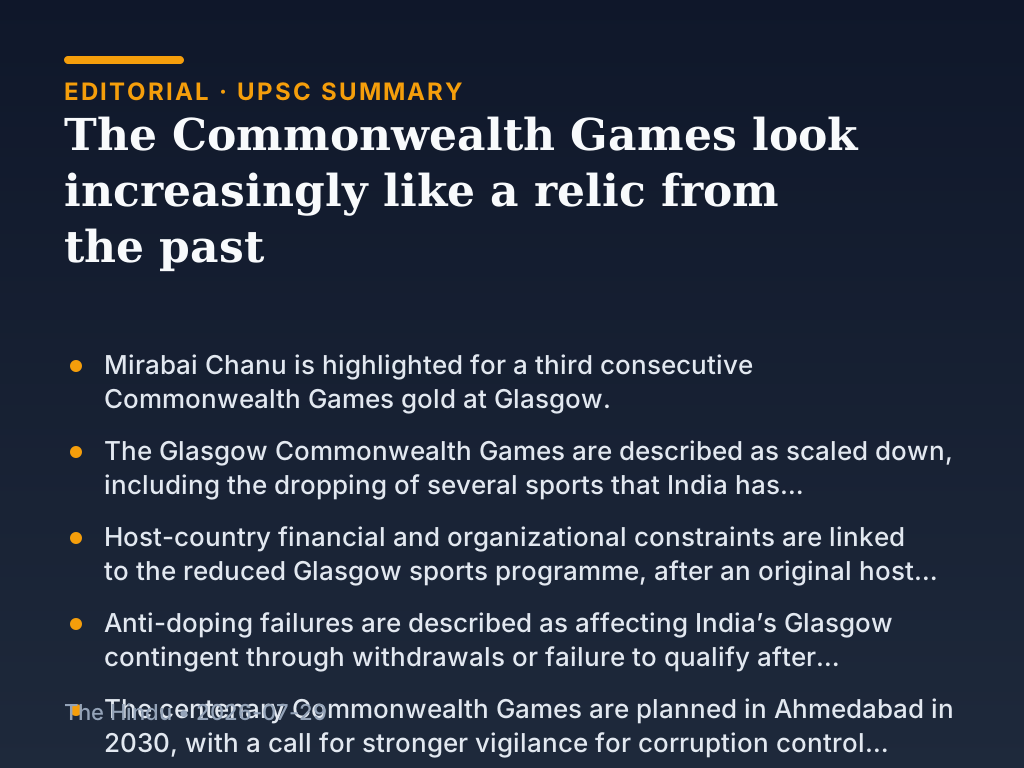
India’s participation in the Commonwealth Games in Glasgow is described as a mix of medal opportunity and reduced overall importance. The Glasgow edition is described as scaled down, with a reduced sports programme.
A key highlight for India is Mirabai Chanu winning gold at the Commonwealth Games in Glasgow, credited as her third consecutive Commonwealth Games gold. The narrative links this achievement with expectations of additional medals across multiple sports and weight categories.
Background and earlier position: reduced programme after host-country constraints
The Glasgow Commonwealth Games are described as having a reduced sports programme, including the dropping of several sports in which India has traditionally performed well. The stated reason for the reduction is host-country financial and organizational constraints after an original host withdrew.
Even with the reduced sports programme, the Games are still described as providing a platform for athletes and for sports administrators. The note argues that the smaller scale makes the event less relevant than earlier editions.
Related current affairs
- Can Indian athletes punch up in the scaled-down Games?
- PM meets Commonwealth Games champions; discusses Khelo India, SAI support and sports culture
- Govt. efforts since 2014 paid off in sports arena: Minister
- International performance trends (Olympics, Paralympics, Asian Games, Commonwealth Games)
- Mirabai need not push for third gold: coach Vijay
- Different approach