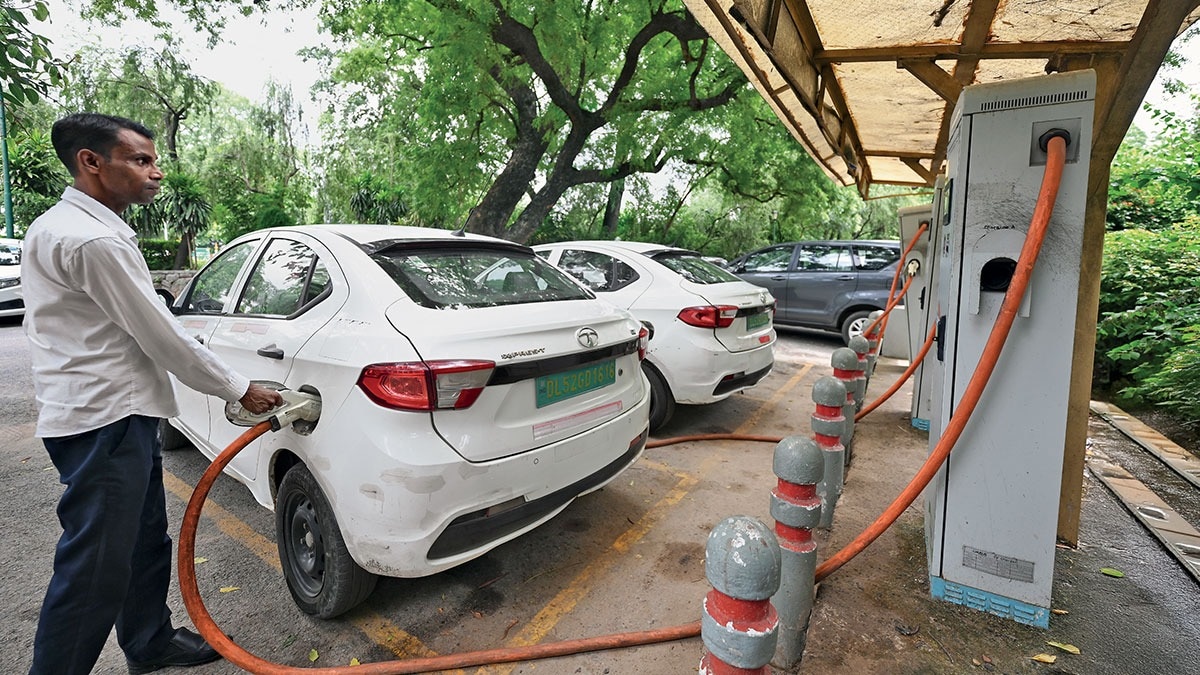
Delhi’s electric vehicle transition is a useful UPSC case study in how policy targets depend on market readiness and infrastructure. The current assessment says electric three-wheelers may meet the target more easily, while electric two-wheelers and charging access remain the main challenges.
What the Delhi electric vehicle policy seeks to do
The Delhi government’s new electric vehicle policy sets aggressive deadlines for electrification of three-wheelers, light commercial vehicles, and two-wheelers. The policy is being tested against existing vehicle ownership patterns and charging availability in the capital.
What the current assessment says
The current assessment finds that the three-wheeler target looks feasible because Delhi already has a high share of electric three-wheelers and new registrations are shifting rapidly toward electric vehicles. The two-wheeler target is described as far more difficult because two-wheelers dominate Delhi’s vehicle fleet, electric vehicle penetration remains low, and annual registrations continue to rise.
The assessment also says electric two-wheeler sales would need to rise sharply within a short period for the 2028 deadline to be met. The policy therefore depends not only on intent but also on scale, affordability, and consumer uptake.
Related current affairs
- MHI details FAME-II and other EV schemes, charging infrastructure allocations and EV adoption trends
- Status of public EV charging infrastructure and government steps to address range anxiety (Lok Sabha reply)
- 2,800 new e-buses to hit city roads by 2028
- E-bus charging points to be established in Himachal Pradesh
- Green-Blue Delhi and environmental measures under MPD-2047 (Yamuna restoration, cycle track, net zero, green mobility)
- Delhi I-Day celebrations: Speaker, DU Vice-Chancellor lead; CM advises youth on nation-building; L-G calls for ‘Viksit Delhi’