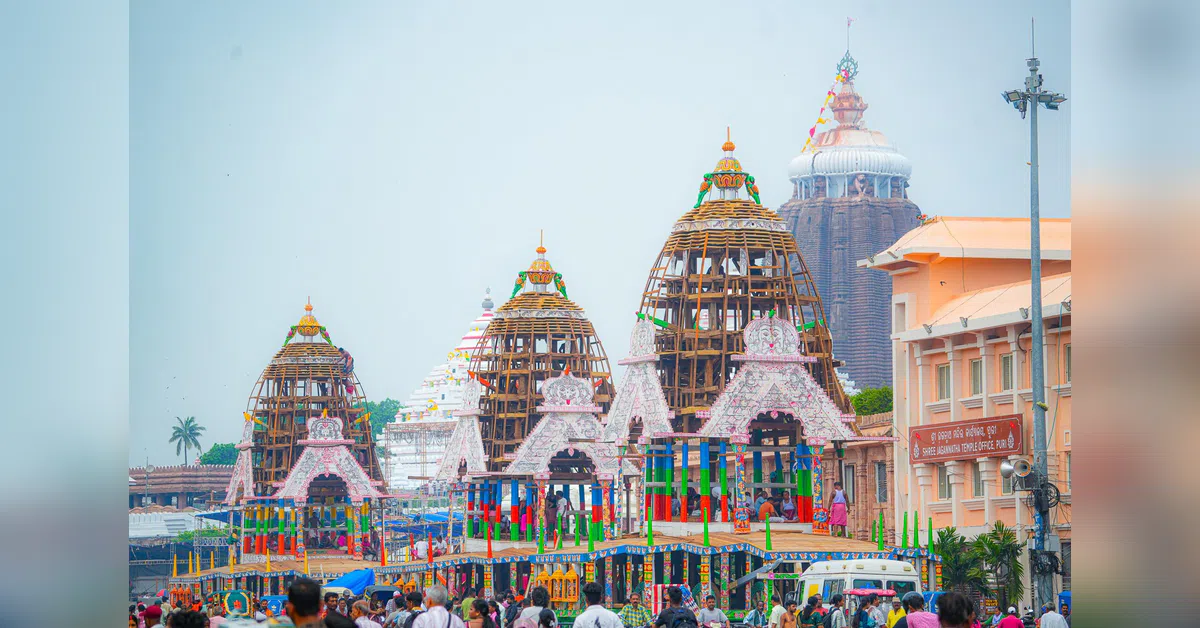
A dispute over the timing of Rath Yatra in Puri, Odisha has become a larger debate on ritual authority, religious identity, and state influence. The issue matters for UPSC because it connects Indian culture with constitutional questions on religious freedom and the management of religious institutions.
Temple-linked leaders in Puri say the Shree Jagannath Temple follows a centuries-old calendar for major rituals, and that the festival date is part of a sacred system specific to Puri. The controversy has intensified because the International Society for Krishna Consciousness (ISKCON) has held or planned Rath Yatra events on different dates in India and abroad, including dates outside the traditional Puri window.
What happened
The press report says local resentment has grown because ISKCON began observances this year on May 9 and planned processions across many global locations and multiple sites in Madhya Pradesh during a period that includes days outside the traditional Puri nine-day window. Puri stakeholders argue that the timing of Snana Yatra and Rath Yatra should follow the temple calendar rather than organisational convenience.
Dibyasingha Deb, the titular king of Puri and chairperson of the Shree Jagannath Temple Managing Committee, sent letters on July 4 to President Droupadi Murmu and Prime Minister Narendra Modi. The letters reportedly cited ISKCON’s conduct of Snana Yatra and Rath Yatra outside the prescribed dates.
Related current affairs
- Odisha govt. officers to pay fine for delay in providing public services
- Inter-caste marriage incentive support helps couple build stable life in Odisha
- In Pradhan’s ouster, BJD sees chance to regain lost ground
- Govt releasing its share of SDRF disaster funds to seven flood-affected States
- Alert in Odisha as more water released from Hirakud Dam
- 7 lakh people affected by floods in 20 districts of Odisha