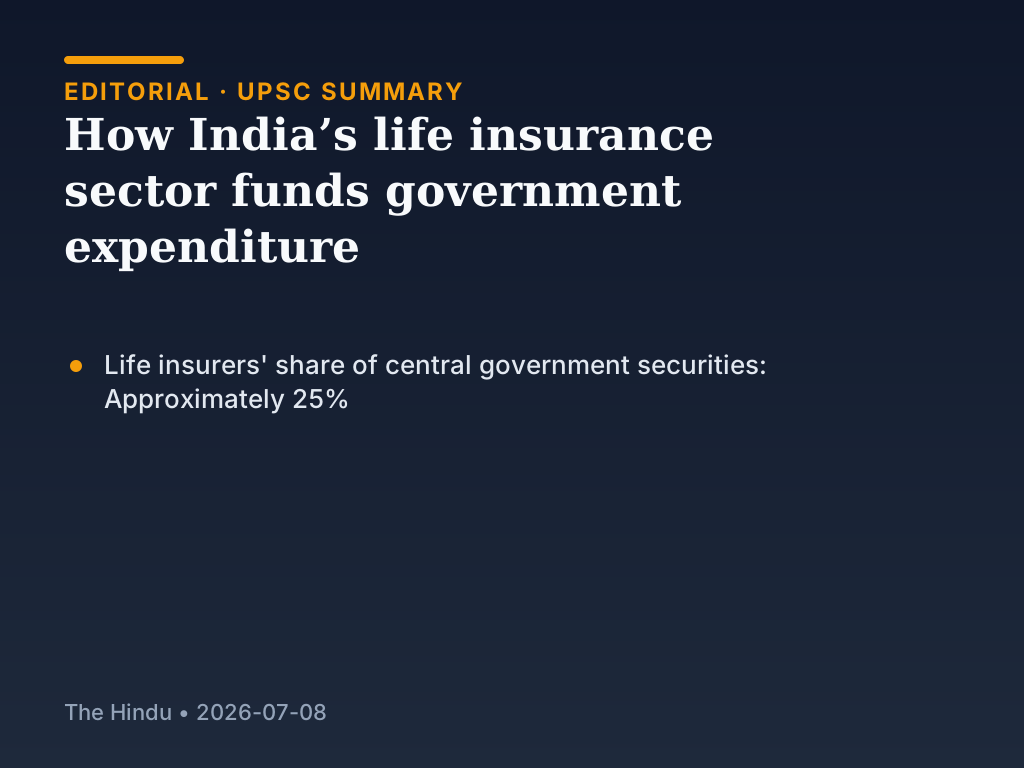
The piece explains how India’s life insurance industry acts as a major source of long-term financing for the government. It argues that household premium payments—made for protecting families against the loss of an earning member—are channelled over long periods into government securities, particularly central government dated debt.
Using RBI and IRDAI-linked data, the author notes that life insurers collectively hold roughly a quarter of outstanding central government dated securities, a share that has remained relatively stable even as the government’s overall dated debt stock has risen sharply in recent years.
This funding is important for sovereign financing. Life insurance liabilities are typically long-duration (often 20–40 years), so insurers prefer matching long-tenor assets. Unlike foreign investors who can alter exposure quickly, insurance companies buy and hold for long periods, making their participation comparatively counter-cyclical.
A large portion of this role is attributed to the Life Insurance Corporation of India (LIC). The article highlights that LIC dominates the sector’s sovereign holdings due to its scale. LIC holds around two-thirds of its non-linked policyholder corpus in sovereign paper, significantly impacting the market.
Related current affairs
- Bridging the affordability gap in term life insurance
- Linking women’s incomes and healthcare
- Cooperative model as an alternative to hypercompetitive capitalism: Ministry of Cooperation’s expansion agenda
- Cooperative life insurance firm to be set up soon: Shah
- Hormuz to home: India’s resilience in uncertain times through energy security and coordinated policy response