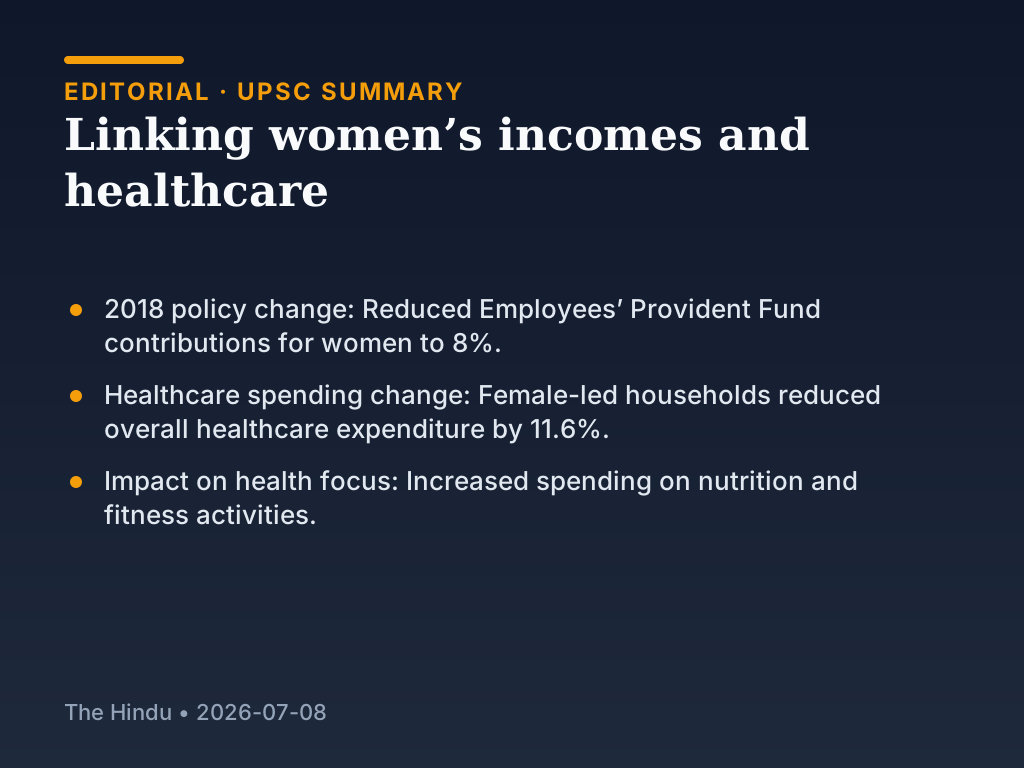
The article explains how India’s rise in women’s participation in work is occurring alongside a shift in public health challenges from primarily infectious diseases to chronic conditions like diabetes, hypertension, cardiovascular disease, obesity, and mental health disorders. It argues that these two revolutions—economic and epidemiological—are often discussed separately, but new research suggests they may be strongly connected through household behaviour.
Using an economic framework, the piece highlights that healthcare progress is typically measured by inputs such as more hospitals, doctors, insurance coverage, and higher spending. While these remain crucial—including measures like Ayushman Bharat—health is also determined by factors outside hospitals: nutrition, lifestyle, preventive care, education, sanitation, and informed household decisions.
The core empirical argument is based on a policy change in 2018 affecting Employees’ Provident Fund contributions for newly employed women in the formal sector. The reform reduced mandatory contributions for women from 12% to 8% during the first three years, effectively increasing take-home pay without changing gross wages. Researchers then examine how households responded to this income shock.
Related current affairs
- Vice-President inaugurates GKNM College of Nursing in Coimbatore
- A Birthday Tribute — and a Conversation About the City’s Building
- BRICS Women Ministerial Meeting Concludes in Kochi
- Cooperative model as an alternative to hypercompetitive capitalism: Ministry of Cooperation’s expansion agenda
- How India’s life insurance sector funds government expenditure
- BRICS Women Ministerial Meeting begins in Kochi under India’s 2026 Chairship