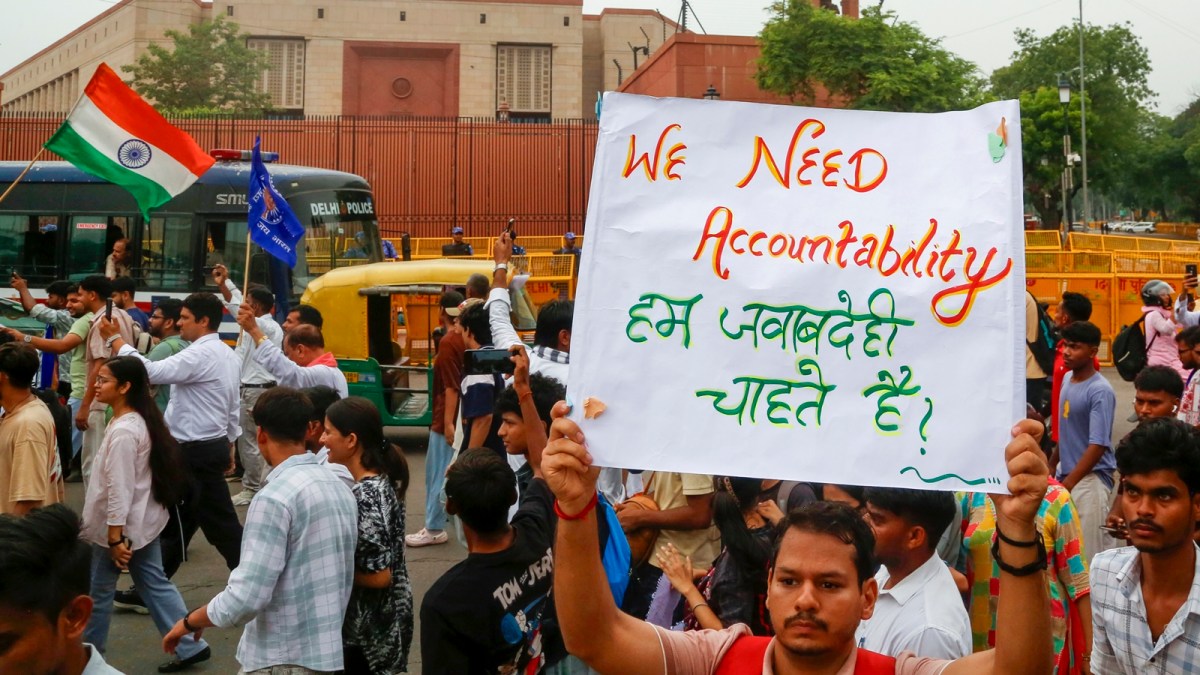
Protests near the Parliament complex in Delhi became a major political event as the monsoon session began. Police used lathis and tear gas to stop demonstrators from marching toward the Houses of Parliament, highlighting the tension between public dissent and institutional security.
The area outside Parliament in Delhi is a high-security zone where crowd control, access regulation, and the security of constitutional institutions become immediate concerns during protests.
Background and earlier position
The right to assemble peacefully is protected under Article 19(1)(b) of the Constitution, subject to reasonable restrictions under Article 19(3) in the interests of public order. In practice, protests near Parliament require careful balancing between civil liberties and the security of constitutional institutions.
Delhi Police handles law and order in the National Capital Territory of Delhi, and security around Parliament is treated as a matter of national institutional protection. Central Delhi therefore remains a sensitive zone where crowd control and constitutional protest rights often collide.
What changed now
Related current affairs
- Police fire tear gas and protesters rush; crowd scenes at Parliament Street
- Treat waterlogging as disaster, work on war footing: L-G to officials
- In Brief: 477 lakh voters out of draft roll in Delhi
- Opposition unity rattled Modi govt., says Congress
- The cliche of the Monsoon Session comes to an end
- BJP president accuses Congress of ‘fleeing’ debate and disrupting Monsoon Session