What happened
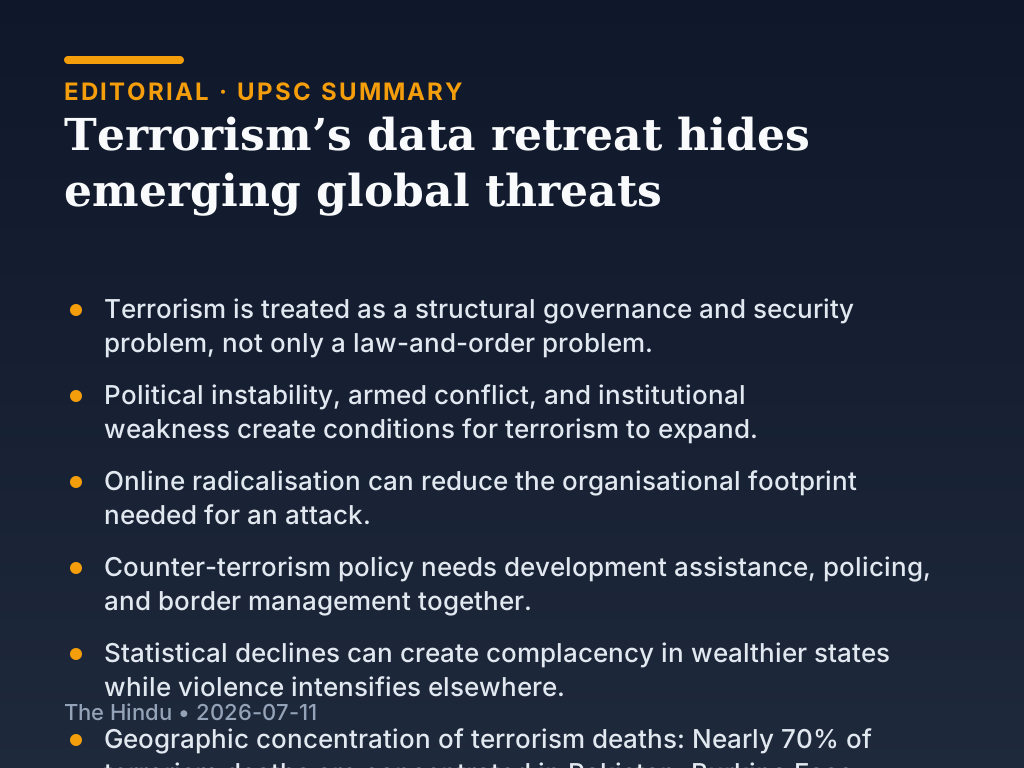
Global terrorism fatalities and attacks declined in 2025, but the decline does not mean the world is safer. Terrorism is becoming more concentrated in fragile states, borderlands, and digitally enabled recruitment ecosystems.
A global downward trend in 2025 still hides sharp geographic concentration. Nearly 70% of terrorism deaths are concentrated in Pakistan, Burkina Faso, Nigeria, Niger, and the Democratic Republic of the Congo, while Sub-Saharan Africa, including the Sahel, accounts for over half of global fatalities.
Modern terrorism is becoming more decentralised and transnational. Lone-actor violence is increasingly linked to online radicalisation ecosystems, and low-tech attacks can still generate high-impact fear in pluralistic societies.
Why the threat is changing
Political instability, armed conflict, and institutional weakness create conditions in which terrorism expands. Terrorism often grows where state capacity is hollowed out and where diplomatic collapse or armed conflict gives extremist groups space to operate.
Related current affairs
- Policeman killed in terrorist attack in J&K
- Briefly: Union Home Minister Amit Shah reviews BSF security amid rising concerns
- 40 Years Ago: Apprehensive trends in Punjab
- Centre plans integrated command centres to step up border security
- Home Minister directs police chiefs to detect and deport illegal migrants
- CRPF sub-inspector injured, two houses torched in clash between Manipur groups