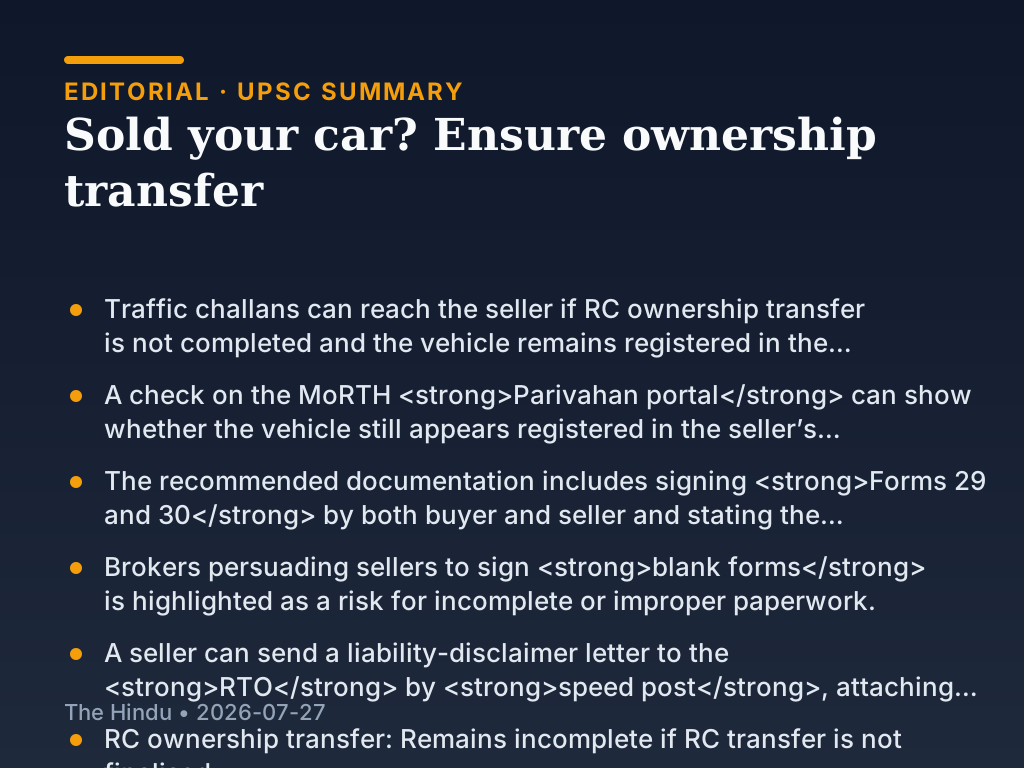
What happened: incomplete RC ownership transfer keeps the seller exposed
A business-journalist highlights that selling a car is not “complete” from an enforcement-accountability standpoint until RC ownership transfer is recorded in government records. In a real-life anecdote, a relative received a traffic challan for a vehicle sold years earlier, and a check on the Ministry of Road Transport and Highways (MoRTH) Parivahan portal still showed the vehicle registered in the seller’s name because the buyer never completed RC transfer.
Background and earlier position: ownership responsibility depends on RC record change
Vehicle ownership responsibility in government systems depends on RC ownership records. Even after vehicle handover, the seller can face consequences if the vehicle remains registered under the seller’s name because enforcement actions and notices typically follow the registered owner in the transport database.
What changed now: focus on correct paperwork, evidence, and faster transparency
The discussion shifts attention from only exchanging keys and money to ensuring that paperwork and record-updating steps are completed. It also argues for better online tracking of transfer status for both buyer and seller and faster alerts when RC transfer remains incomplete beyond a reasonable period.
Related current affairs
- Disciplinary and debarment actions against officials for lapses in monitoring and supervision on Kanpur–Lucknow Expressway
- NHAI amends AE/IE consultancy RFPs to mandate minimum remuneration and revise Site Engineer engagement
- Govt. issues public consultation guidelines for highway projects after panel recommendations
- 3rd BRICS Transport Working Group Meeting Begins in Nagpur, Maharashtra