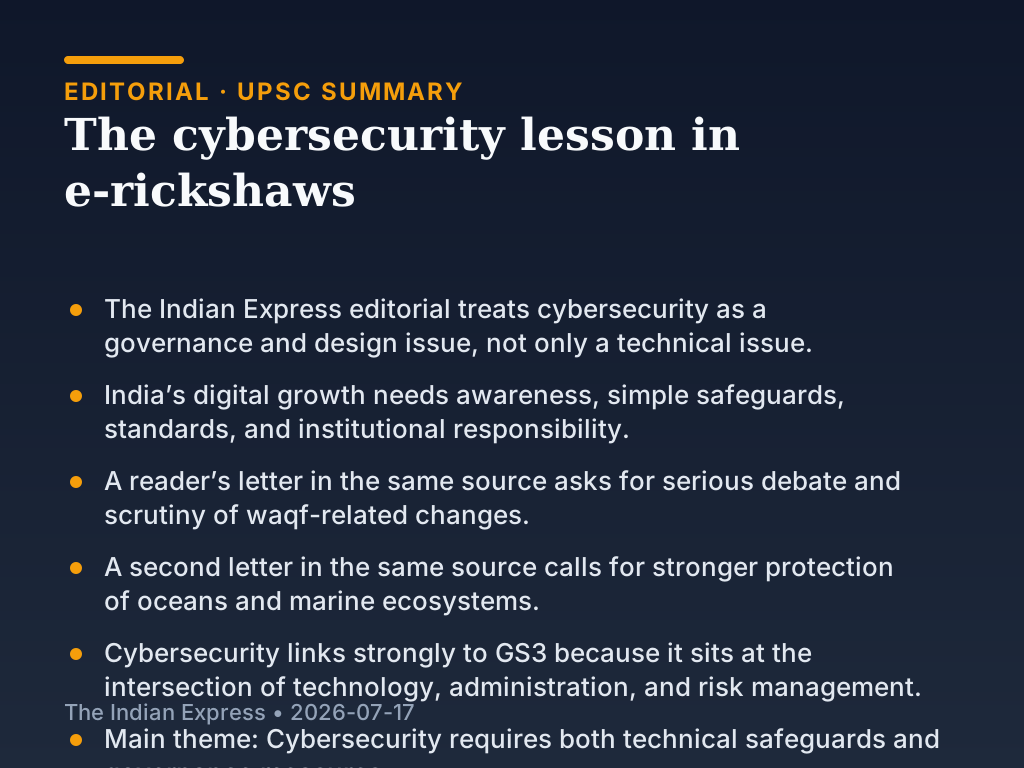
The Indian Express editorial uses the everyday example of e-rickshaws to explain a larger point about cybersecurity: digital safety failures are often also failures of governance, design, training, and institutional responsibility. India’s digital growth needs both simple user-side cyber hygiene and stronger system-level safeguards.
The core proposition is that technology adoption alone does not create secure digital systems. The Indian Express links cybersecurity to awareness, simple safeguards, standards, and accountable institutions, and says that India’s digital expansion must be matched by resilience at the policy and operational level.
Other viewpoints in the same source
A reader’s letter calls for serious debate and scrutiny of the government’s waqf-related changes, arguing that the issue affects public trust, religious institutions, and governance. A second letter stresses ocean protection and marine ecosystem conservation as a shared responsibility that needs sustained policy attention.
Why this matters for UPSC
The cybersecurity argument maps directly to GS3 because UPSC repeatedly tests the link between digital technology, governance capacity, and risk management. The waqf-related letter is relevant to GS2 themes of transparency, stakeholder consultation, and institutional trust. The marine conservation letter fits GS3 environment questions on ecological stewardship and resource governance.
Related current affairs
- India leads 12th BRICS Communications Ministers’ Meeting in Pune; focuses on sustainable ICT, cybersecurity, skilling and innovation
- India and Brazil sign MoU to strengthen bilateral cooperation in telecommunications and ICTs
- Public/legal notices block (including business/department registration and police/tender notices)
- Keynote address by DoT Secretary on cybersecurity, trustworthy ICTs and child online protection; highlights Aadhaar, UPI, IT Act and DPDP Act
- 12th BRICS Communications Ministers Meeting to be held on 21 August 2026
- AI, Quantum, Cybersecurity and Digital Tools are rapidly transforming governance: Dr. Jitendra Singh