What happened
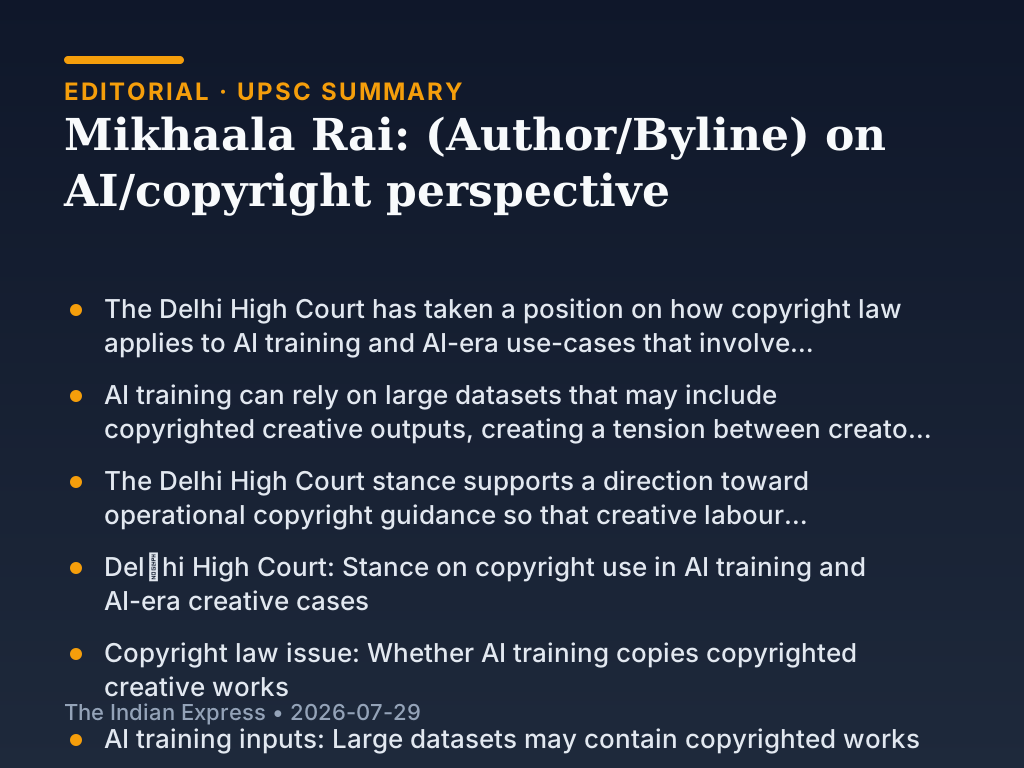
The Delhi High Court has taken a position on how copyright law applies to artificial intelligence (AI) training and other AI-era use-cases that involve creative works. The practical consequence is compliance pressure: AI developers, platforms, and users need clearer guidance on whether dataset-building, training-time copying, and later model use may fall within lawful copyright boundaries that affect creative labour.
Background and earlier position
AI training often relies on large datasets that can include copyrighted creative material such as text, images, music, and other creative outputs. Copyright law protects creators’ original expression, while AI systems typically require data to learn statistical patterns and improve performance.
This creates recurring questions about the legality of large-scale copying for training. The policy tension can be stated clearly: creators need protection from unlicensed or unfair exploitation of protected expression, while technology development needs lawful routes to train and test AI systems using data.
What changed now
Related current affairs
- Delhi HC shows a better way to think about copyright & AI
- IB officer’s murder: Tahir Hussain moves HC against conviction
- Lakshmi scheme: CM hands sanction letters to over 4,000 women
- Delhi HC seeks responses over Saurav Das’s privacy plea
- Delhi HC seeks rationale for MP/MLA endorsement to get Lakshmi Yojana aid
- Conviction after 34 years: how Sajjan Kumar dodged law