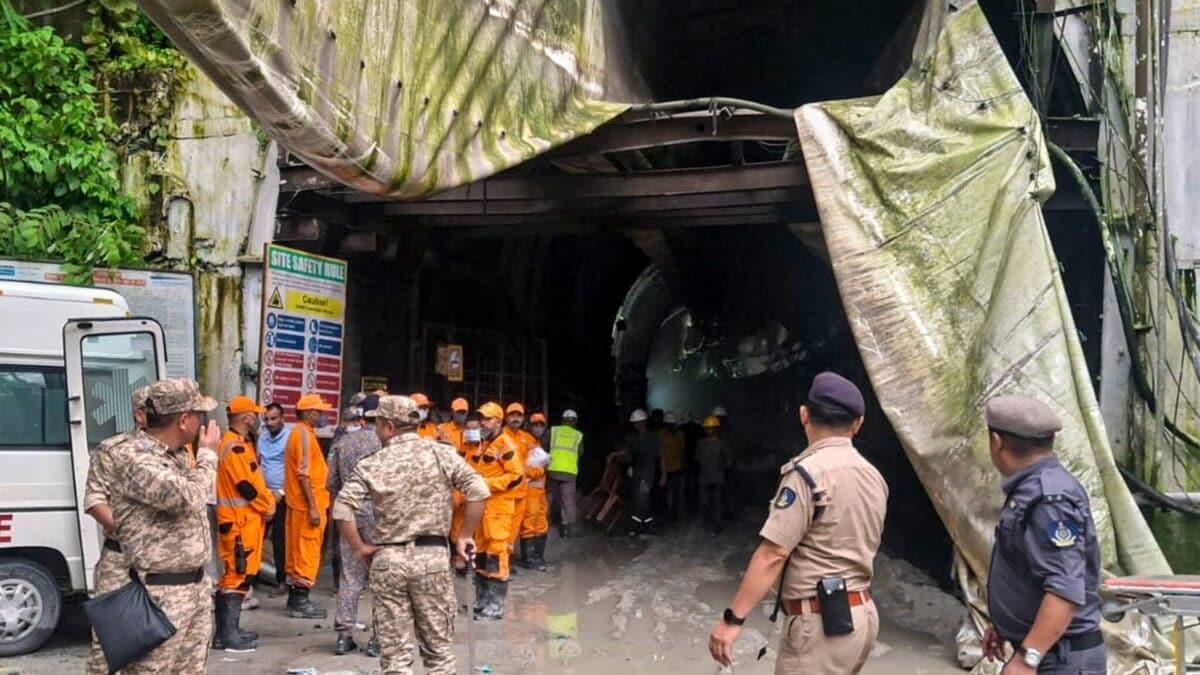
The Sikkim tunnel blast and collapse has become a major rescue and safety challenge after the death toll rose to 22. Rescue teams are still searching for the remaining trapped workers, while the damaged tunnel structure and unstable terrain are narrowing the rescue window.
The incident is important for UPSC because it combines disaster management, infrastructure safety, and administrative response in a fragile mountain setting. The immediate question is rescue, but the larger issue is how construction risks, safety standards, and emergency access are managed in difficult geographies.
What happened
An explosion was followed by a collapse at the tunnel site in Sikkim. The collapse trapped workers and made rescue operations difficult because the structure was damaged and access to the site remained limited.
Why the incident matters
Mountain infrastructure projects require strong safety design, emergency access planning, and rapid coordination among agencies. A tunnel collapse in unstable terrain tests both engineering safeguards and the capacity of the state machinery to conduct rescue operations under pressure.
Related current affairs
- Sikkim tunnel blast toll rises to 22 as rescue window narrows
- 20 dead after blast at under-construction tunnel in Sikkim
- Sikkim tunnel tragedy toll rises to 15; rescue operation continues
- Toxic gas leak: 20 dead, efforts on to rescue 5 (NHPC tunnel incident in Sikkim)
- Cargo tunnel safety system fails in accident after coach catches fire
- Death toll reaches 8 in Wayanad debris slip; body of missing project manager recovered; company ordered to clear debris