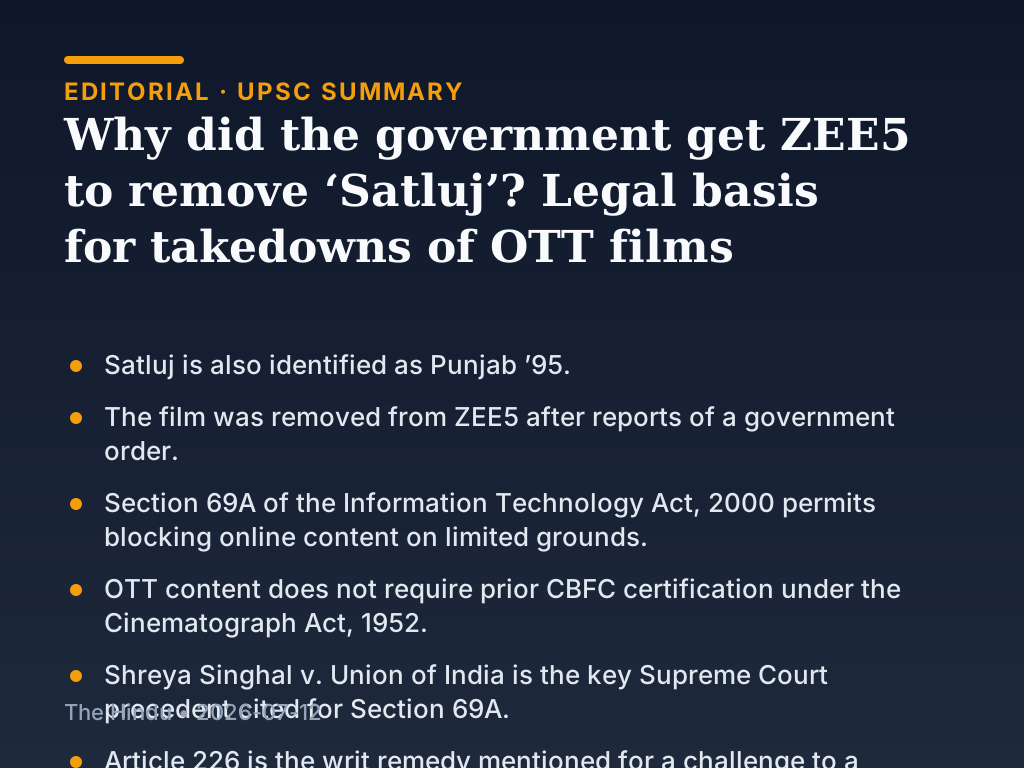
The removal of Satluj, also identified as Punjab ’95, from ZEE5 raises a direct question for Indian polity and governance: what legal power allows the Government of India to block or remove an OTT film after release? The explainer places the episode within the framework of Section 69A of the Information Technology Act, 2000, the Information Technology (Intermediary Guidelines and Digital Media Ethics Code) Rules, 2021, and constitutional limits on censorship.
What happened
The explainer says reports attributed the removal of the film to a government order. It also notes that a Centre-appointed committee was examining the film under Section 69A. The film portrays the life of human rights activist Jaswant Singh Khalra in the context of Punjab in the 1980s and 1990s.
Khalra is described as documenting allegations of extrajudicial killings, enforced disappearances, and illegal cremations during Punjab’s militancy years. The explainer states that Khalra estimated large-scale secret cremations, was abducted in 1995, and was allegedly killed in custody on the basis of a Central Bureau of Investigation (CBI) conclusion.
Why OTT films are treated differently from theatrical films
The explainer contrasts OTT release with theatrical release. Directly streamed content does not require prior certification from the Central Board of Film Certification (CBFC) under the Cinematograph Act, 1952. OTT regulation instead operates through the IT framework, especially the 2021 Rules and the blocking power under Section 69A.
Related current affairs
- Why did the government get ZEE5 to remove ‘Satluj’?
- DRPC Standing Committee on Home Affairs presents 259th, 260th and 261st Reports in Parliament
- Court’s jurisdiction under Article 226 of the Constitution
- Hiding the scissors: The censor board has strayed from the law that underpins its existence
- Where does the law stand on internet shutdowns?
- Govt disables 50 OTT platforms in last two years for obscene content and IT Act violations