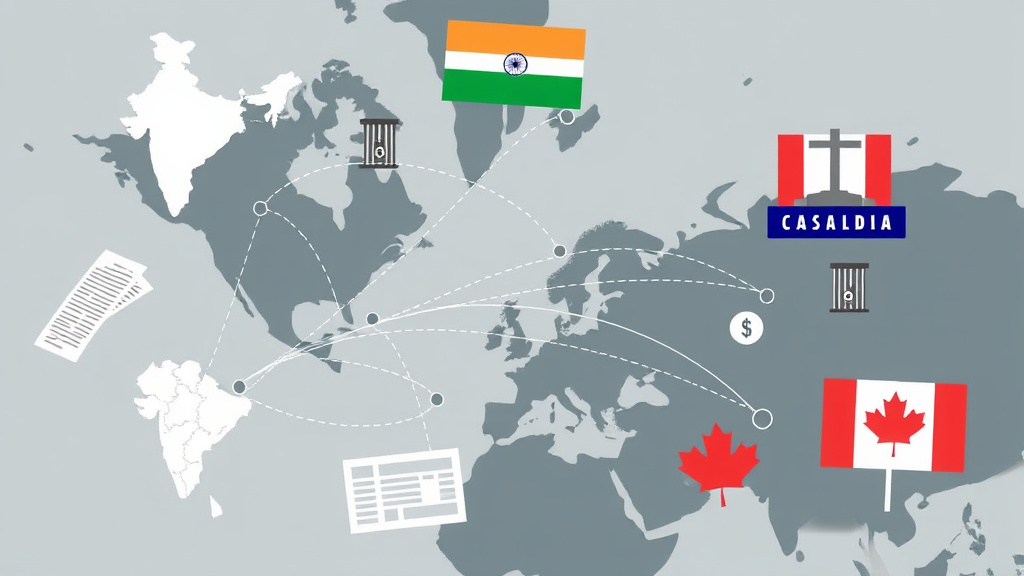
The U.S. Department of Justice has indicted three Punjab-linked transnational organised crime syndicates operating across India, North America, Europe, and other regions. The case matters for UPSC because it combines organised crime, narcotics trafficking, prison-based leadership, diaspora linkages, and international cooperation in criminal investigation.
What the indictment alleges
The main network is led by Lawrence Bishnoi, with alleged North American coordination by Goldy Brar and European activity by Rohit Godara. The second syndicate is tied to Jaggu Bhagwanpuria, and the third is linked to Canada-based Ravinder Singh Dhanda and is described as focusing largely on narcotics trafficking.
Investigators allege that the Bishnoi syndicate ran a fear-based criminal network involving targeted killings, shootings, kidnappings, assaults, extortion, and drug trafficking. The indictment also links the group to the killing of Punjabi singer Sidhu Moosewala, threats to Gippy Grewal, and an alleged plot against Salman Khan.
Methods attributed to the syndicate
The investigation alleges that the gang used social media to project a nationalist and religious image, recruited impoverished minors, moved members abroad on fraudulent visas, and continued operations from prison. Such features are important because they show how organised crime can adapt to digital platforms, migration channels, and custodial constraints.
Related current affairs
- Why did the U.S. indict Lawrence Bishnoi? Charges around three Punjab-linked transnational organised crime syndicates
- Bishnoi ran decentralised syndicate, wanted ‘S.K.’ killed to instil fear: U.S.
- 274 fugitive criminals brought back in 7 years: govt.
- Bangladesh ex-premier Hasina vows to return by year-end despite fearing for life
- Apology is in order, says former envoy named in Nijjar case