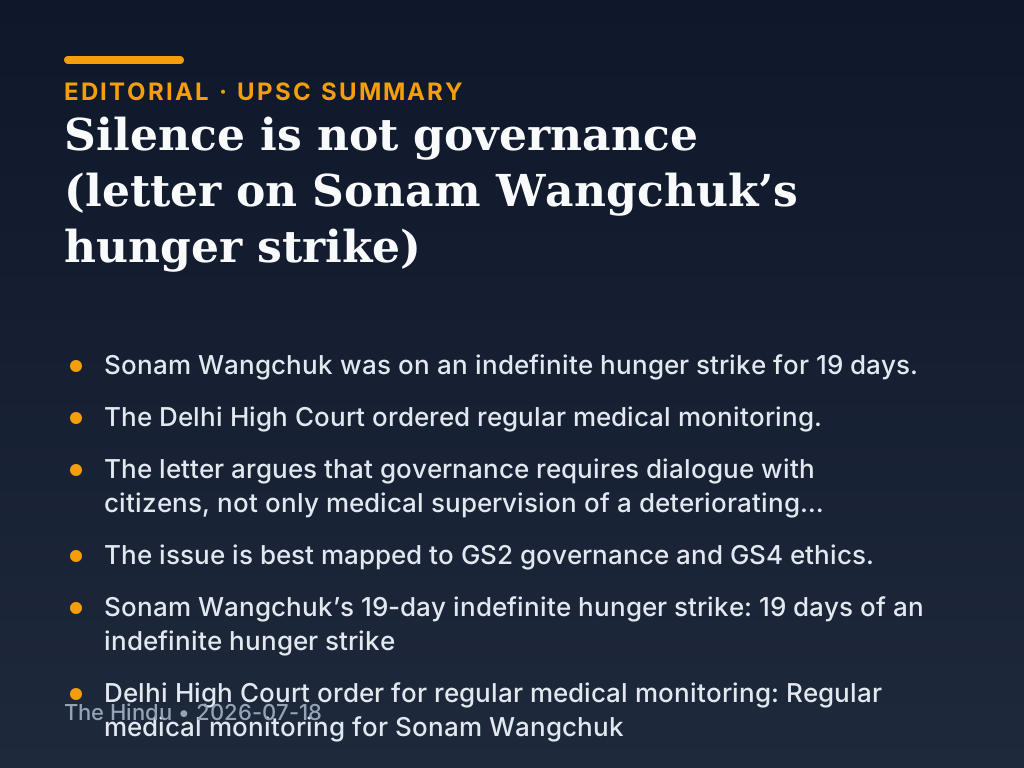
A reader has criticised the governance response to Sonam Wangchuk’s 19-day indefinite hunger strike, saying that deteriorating health during a protest is a serious democratic failure. The letter says the Delhi High Court deserves credit for ordering regular medical monitoring, but argues that court-ordered health checks cannot replace sustained political engagement.
The central argument is that a democracy must listen to citizens and open dialogue when a protest escalates, rather than wait until medical intervention becomes necessary. The letter treats judicial monitoring as a limited safeguard and says governance must address the grievance itself.
Why the issue matters for UPSC
Related current affairs
- ‘Wangchuk not alone’: at least 21 refuse to end fast
- More support pours in as Wangchuk continues hunger strike on 20th day
- Govt doctors must monitor Wangchuk health, directs HC
- Wangchuk weak, Delhi HC orders monitoring
- Sonam Wangchuk to be discharged from hospital today; will visit Rajghat
- Sonam Wangchuk shifted from Safdarjung Hospital to Medanta after HC order