GS2The Indian Express · Editorial
Letters To The Editor: Due process
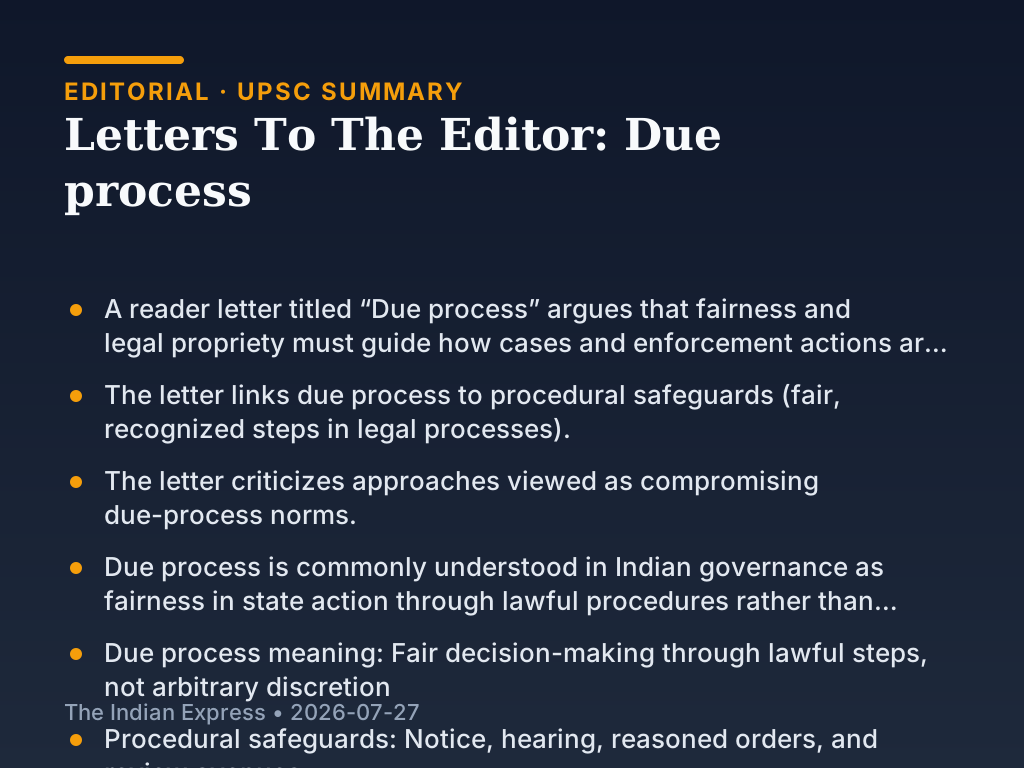
A reader letter in The Indian Express argues that enforcement actions and case handling must follow procedural safeguards to protect due process and fairness.
SP
Samachar Pathshala Desk
Published 27 Jul 2026 · 1 min
Key takeaways
- Procedural justice means officials must follow legally recognized steps like notice, an opportunity to respond, and a reasoned order before enforcing consequences.
- Due process in Indian governance is understood as fairness in state action through lawful procedures, not random or one-sided choices.
- Article 14 (equality before law) and Article 21 (protection of life and personal liberty) are used to insist that state action cannot be arbitrary and must respect fair procedure.
- Procedural safeguards protect citizens from unfair outcomes by requiring the authority to hear the affected person and justify the decision instead of acting on unchecked discretion.
What happened (reader’s claim)
A reader letter titled “Due process” argues that authorities should handle cases and enforcement actions in a manner that is fair and legally proper. The letter highlights procedural safeguards as the core of due process and criticizes handling methods seen as compromising procedural fairness.
Background and earlier position (general due-process idea)
The UPSC angle
GS2GS4
Due process as procedural justice in state action
UPSC can treat “due process” as a governance ethics question: when the State investigates, prosecutes, or enforces, it must follow fair procedures that protect rights and prevent arbitrary outcomes.