GS2The Indian Express · Editorial
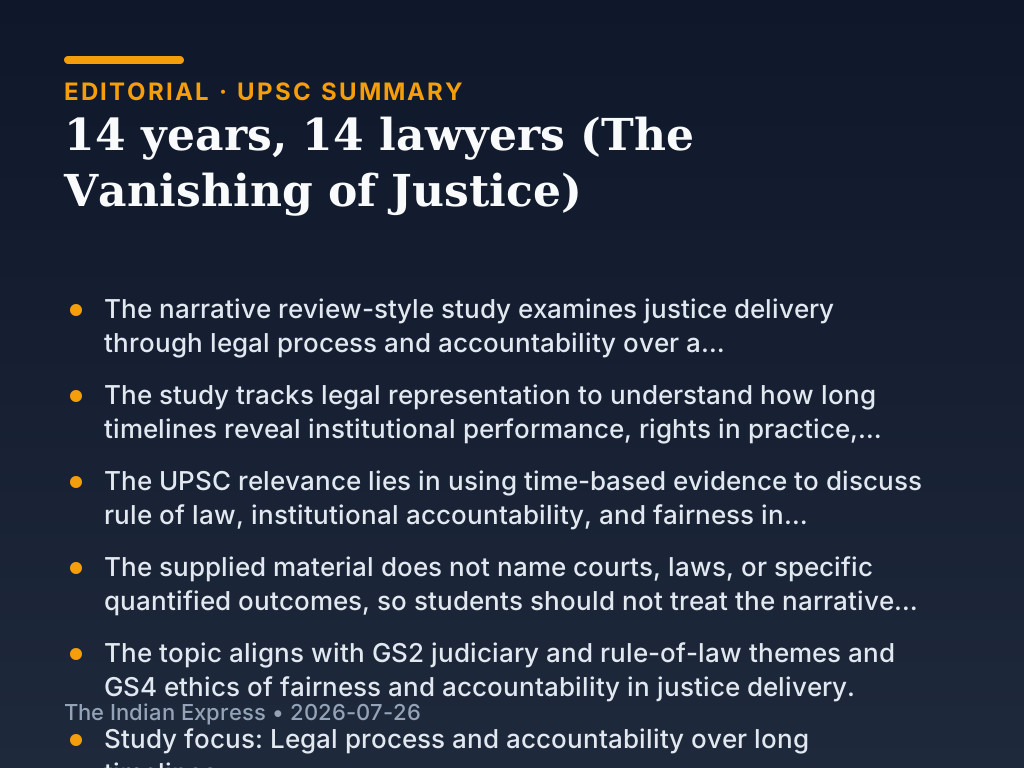
14 years, 14 lawyers (The Vanishing of Justice)
A narrative study tracks legal representation and decision timelines across 14 years to evaluate how justice functions (or fails) in practice.
SP
Samachar Pathshala Desk
Published 26 Jul 2026 · 1 min
Key takeaways
- Justice delivery means the full step-by-step working of courts and related legal processes, not only the final judgement.
- Legal representation means whether a person has effective lawyers, and how lawyer access affects case progress and fairness.
- Long legal timelines can change rights in practice because delays can weaken access to remedies and delay fair outcomes.
What happened
A narrative review-style study over 14 years examines how justice works in practice by tracking legal representation and the long duration of legal proceedings. The study treats the timeline itself as evidence of institutional accountability and rights outcomes.
Background and earlier position
The UPSC angle
GS2GS2GS4
Time as evidence of fairness in justice delivery
For UPSC, the issue can be framed as how long legal processes, representation quality, and case timelines reflect rule-of-law performance and institutional accountability. The focus is on what legal outcomes suggest about rights protection in real settings, not only on formal procedures.