What happened: the Jantar Mantar protest interpreted through “profanation”
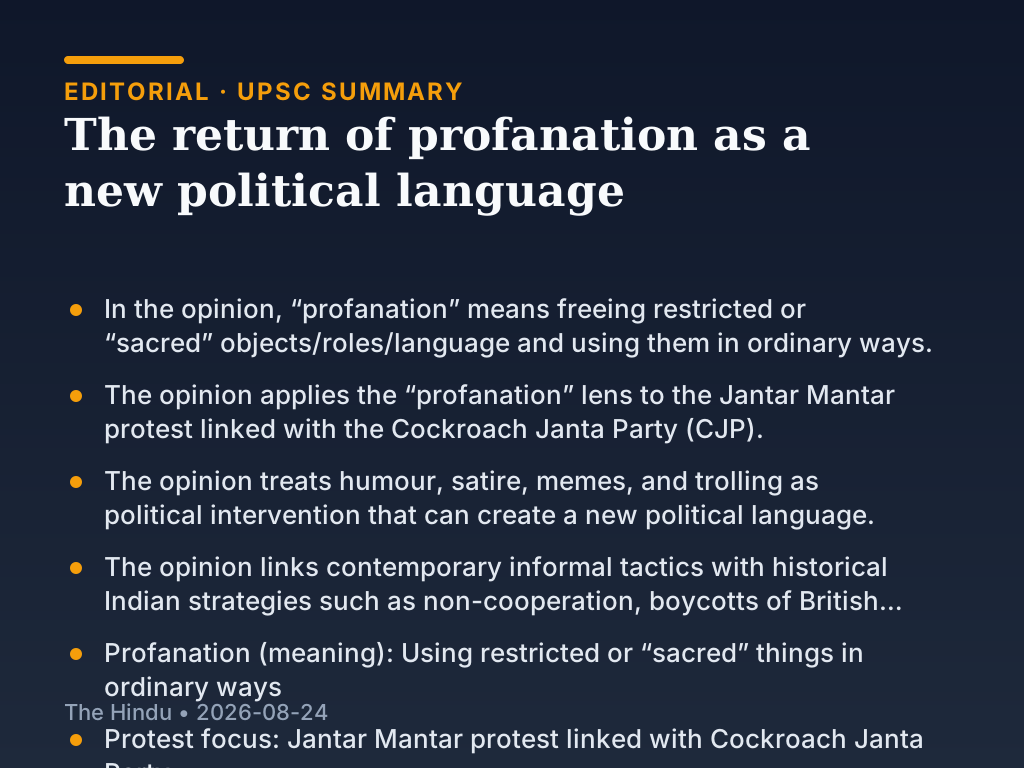
A The Hindu opinion introduces “profanation” as the use of restricted or “sacred” objects, roles, or language in ordinary ways. The opinion applies this idea to student protest politics, focusing on the Jantar Mantar protest linked with the Cockroach Janta Party (CJP).
The opinion argues that humour, satire, memes, and trolling can function as political intervention. In this framing, mainstream coverage may label such street behaviour as “anarchism” or loss of civility, but “profanation” treats the irreverent street performance as a way to communicate political demands and create a new political language.
Background and earlier position: informal rejection has long existed in Indian politics
The opinion connects contemporary informal protest styles with historical Indian political strategies. It cites examples such as non-cooperation, boycotts of British goods, and public refusal or renouncing of awards as forms of political action that delegitimise authority and mobilise the public through everyday disruption.
The opinion also references satirical critique attributed to Mahatma Gandhi, presenting humour and biting commentary as tools that expose power disparities. The broader claim is that Indian political life has included informal public ridicule and language-making, not only formal institutional action.
Related current affairs
- Protesters gather at Jantar Mantar for overhaul of reservation system
- CJP founder launches a campaign to set right school education system
- Mileage dropping, fuel cost must come down too: taxi drivers protest over E20
- Families of injured police personnel want their views discussed in Parliament
- Misguided children used abusive words, want to forgive them (Modi on Jantar Mantar)
- No legal action against Jantar Mantar protesters: Delhi govt.