What happened: 2026 monsoon floods in Assam and the Dikhow river overflow
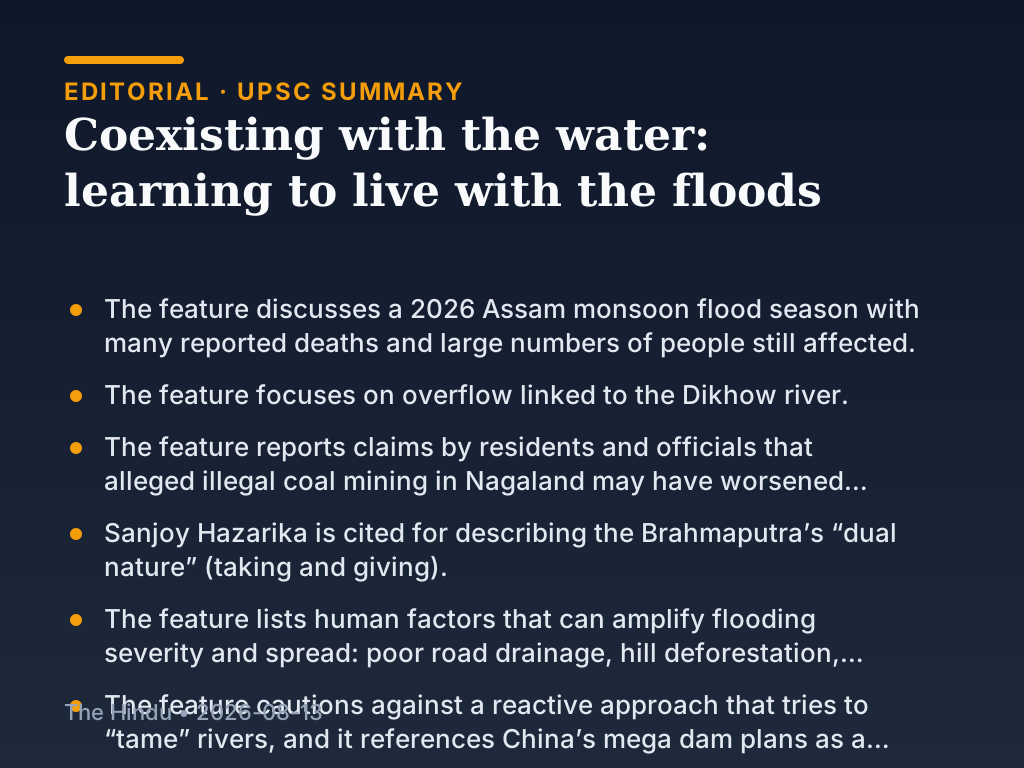
Assam faced a monsoon flood season in 2026 in which many deaths were reported and large numbers of people were still affected. The feature argues that these losses should be read within a longer annual river cycle, not only as a headline-driven, once-a-year accident.
The feature highlights overflow linked to the Dikhow river and reports claims by residents and officials that flooding may have been worsened in areas previously less prone to it. The reported claim is that alleged illegal coal mining in neighbouring Nagaland contributed to the worsening flood conditions in Dikhow-influenced areas.
Background and earlier position: flood dynamics in Assam’s river ecology and the Brahmaputra basin
The feature places Assam’s floods inside the Brahmaputra basin’s river ecology and history. It stresses the centrality of rivers to settlement patterns, agriculture, trade, and migration, and it points out long-running attempts to control rivers through embankments and dams.
A key idea presented is that flooding is multi-causal—driven by a mix of natural processes and human impacts—rather than produced by a single factor every year. Journalist Sanjoy Hazarika is cited for describing the Brahmaputra as having a “dual nature” (taking and giving). Flooding, in this framing, becomes part of how the river shapes land over time.
Related current affairs
- A flood of woes in Assam
- HC notice to Assam, Nagaland on plea linking illegal mining to floods
- Stone quarries and crushers in the vicinity could cripple Assam’s semiconductor unit
- RHINO HABITAT: SC panel slams Assam govt. for inaction on mining
- SC committee pulls up Assam government for inaction over mining activity near Kaziranga
- Assam govt. working to make State flood-resilient, says CM