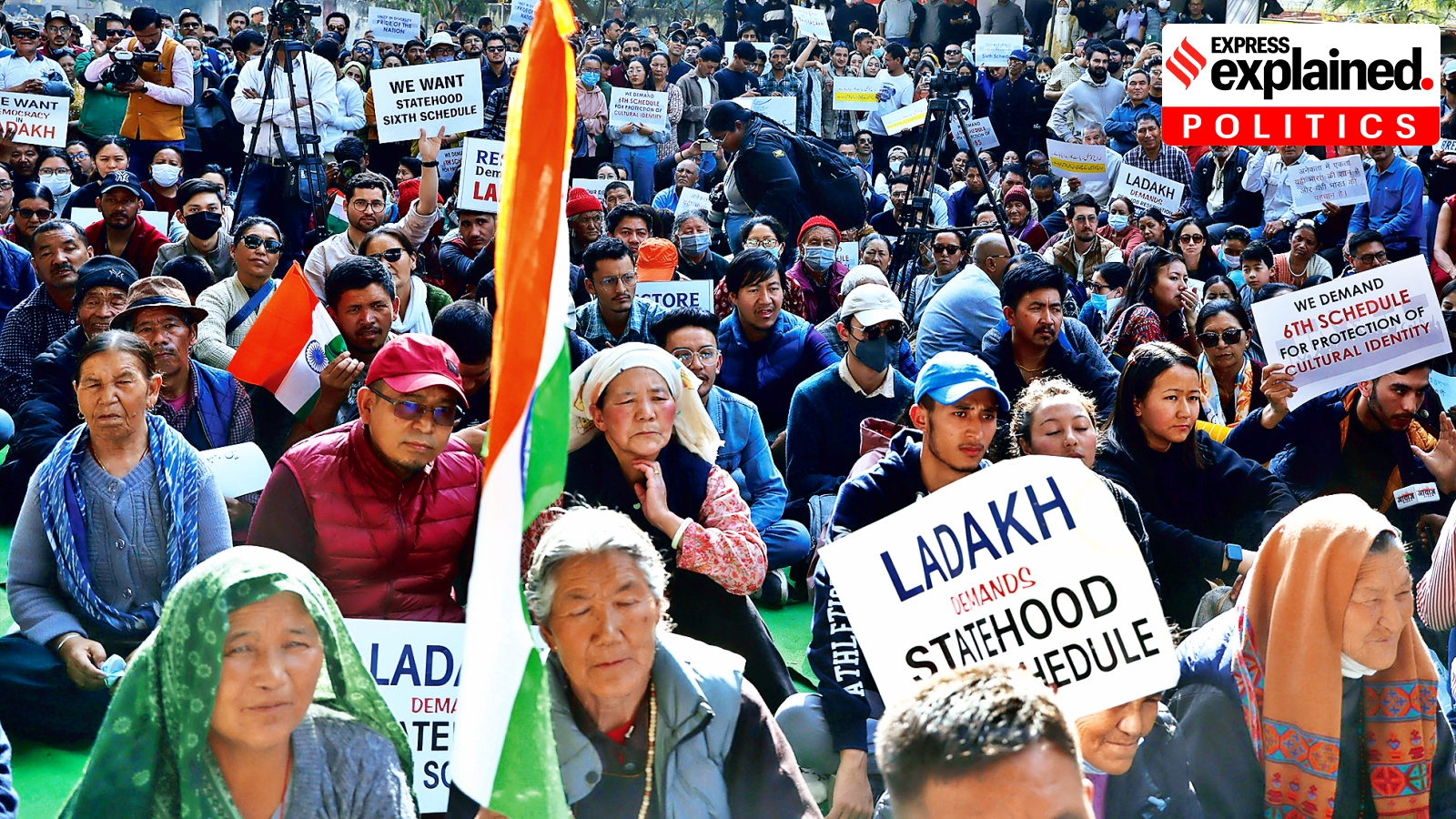
Ladakh’s political groups and civil society organisations have rejected the Union government’s draft changes to the Ladakh Autonomous Hill Development Councils. They argue that the proposal gives administrative power without enough democratic control, and that the ceiling on elected representatives is too low.
The dispute matters because Ladakh remains in a politically unsettled phase after the revocation of Article 370. Local actors want stronger elected representation, greater autonomy for Leh and Kargil, and safeguards for land, jobs, and cultural identity.
The current debate is therefore not only about council design. It is also about the larger question of whether Ladakh will receive a durable political settlement that expands local self-rule or remains under tightly controlled Union administration.
Background and earlier position
The Ladakh Autonomous Hill Development Councils are the existing local institutions in Leh and Kargil that handle development and local administration. The current objections suggest that local groups see the councils as important democratic bodies that should not be weakened by a narrow representation structure.
Ladakh stakeholders and the Centre have been in negotiations over the councils’ role, the demand for statehood, and the extent of Union Territory control. The broader unresolved questions are statehood, the space available for local political participation, and the balance between development administration and self-rule.
Related current affairs
- Data Point: Misleading contentions and unkept promises
- Why Centre keeps holding local bodies in limbo; Congress asks about elections
- Centrally Sponsored Scheme: Revamped Rashtriya Gram Swaraj Abhiyan (RGSA) from 2022-23 to build capacity of Panchayati Raj Institutions
- A budget without a proper government in Puducherry
- e-Panchayat Mission Mode Project under RGSA: digital platforms for PRIs (eGramSwaraj, AuditOnline, etc.)
- Union Minister visits SEWA skill training centre in Leh; reviews free skill development programme with MGIRI technical support