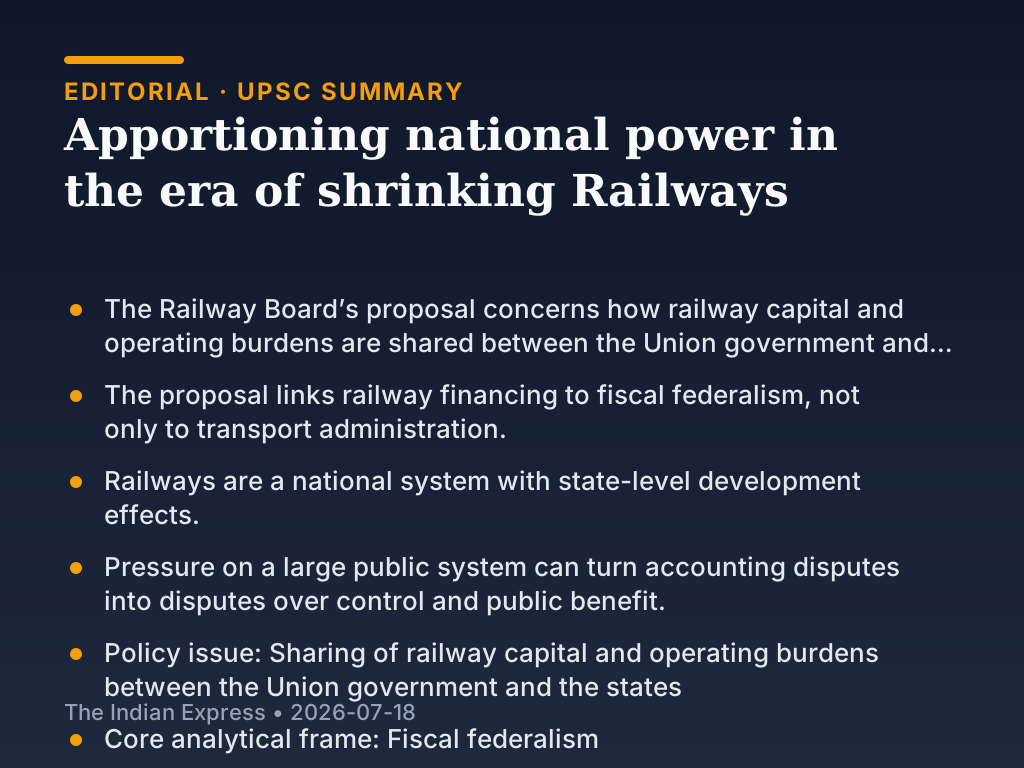
The Railway Board’s proposal to modify how railway capital and operating burdens are shared between the Union government and the states has exam value beyond transport policy. The proposal opens a larger debate on fiscal federalism, public expenditure, and the distribution of authority over a national system that also shapes state-level development.
Railways are a national network, but railway decisions are never politically neutral for the states. Investment choices, deficit burdens, and operating costs affect regional growth, access, and political bargaining.
The Indian Express editorial argues that pressure on a large public system forces a renegotiation of responsibility. Questions over who pays, who controls planning, and who benefits from public assets become central when resources are constrained.
For UPSC, the issue connects directly to Centre-state relations, public finance, and infrastructure governance. The proposal can be read as part of a broader pattern in which the Indian state reassesses Union and state obligations under fiscal stress.
What to remember:
Related current affairs
- PM silent on farmers’ issues, Punjab visit ‘flop show’: AAP
- Denial of nod for U.S. trip an insult to Telangana: CM
- Taxing ‘frivolous’ industries will not fund India’s science
- Mines Bill won’t affect autonomy of States, Minister says in RS
- The cost of unconditional cash transfers
- GST must be fuelled by domestic production, not inflation or imports