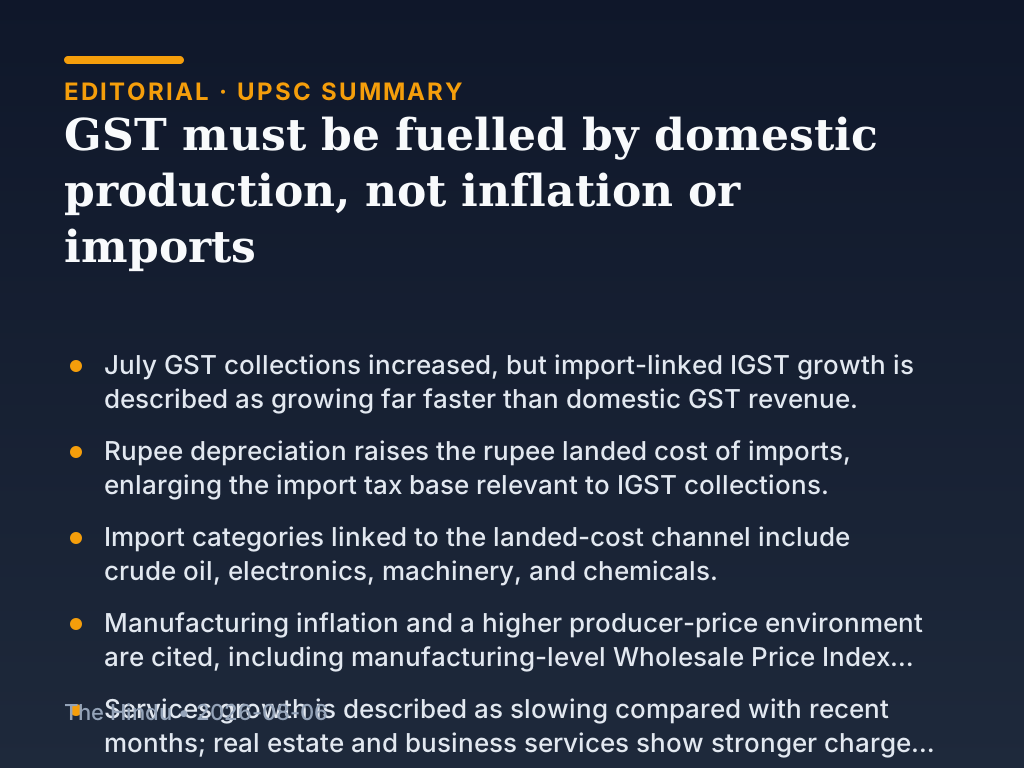
What happened: July GST collections rose, but import-linked and inflation channels appear important
The Goods and Services Tax (GST) collection increase in July is accompanied by a warning about the composition of growth. The caution is that import-linked Integrated GST (IGST) and exchange-rate-linked import landed costs can raise collections even when broad domestic demand and production momentum are weak.
The import- and price-linked channels highlighted are:
Import-linked Integrated GST (IGST) grew much faster than domestic GST revenue, suggesting a strong trade-linked component.Rupee depreciation increases the rupee landed cost of imports, which enlarges the tax base for GST paid at import (reflected in IGST collections).Major import categories cited as affected through landed-cost changes include crude oil, electronics, machinery, and chemicals.Gold imports supported IGST growth, but gold bullion supply fell to a multi-year low, suggesting that some IGST gains may not reflect steady import volume.
Background and earlier position: manufacturing inflation and services slowdown, plus regional unevenness
The caution also links revenue movement to price conditions rather than only to stronger real activity.
Related current affairs
- GST collections rose 15.4% to more than ₹2.11 lakh crore in July on imports and domestic sales
- Defence Export SOP and Open General Export Licence (OGEL) framework simplified to reduce procedural burden and expand global market access
- Centre notifies key scheme to manufacture mobile phones (MPMS)
- Mines Bill won’t affect autonomy of States, Minister says in RS
- Piyush Goyal calls for fair trading practices, circular economy and globalisation of ‘Make in India’ at Bharatiya Vyapar Mahotsav
- The cost of unconditional cash transfers