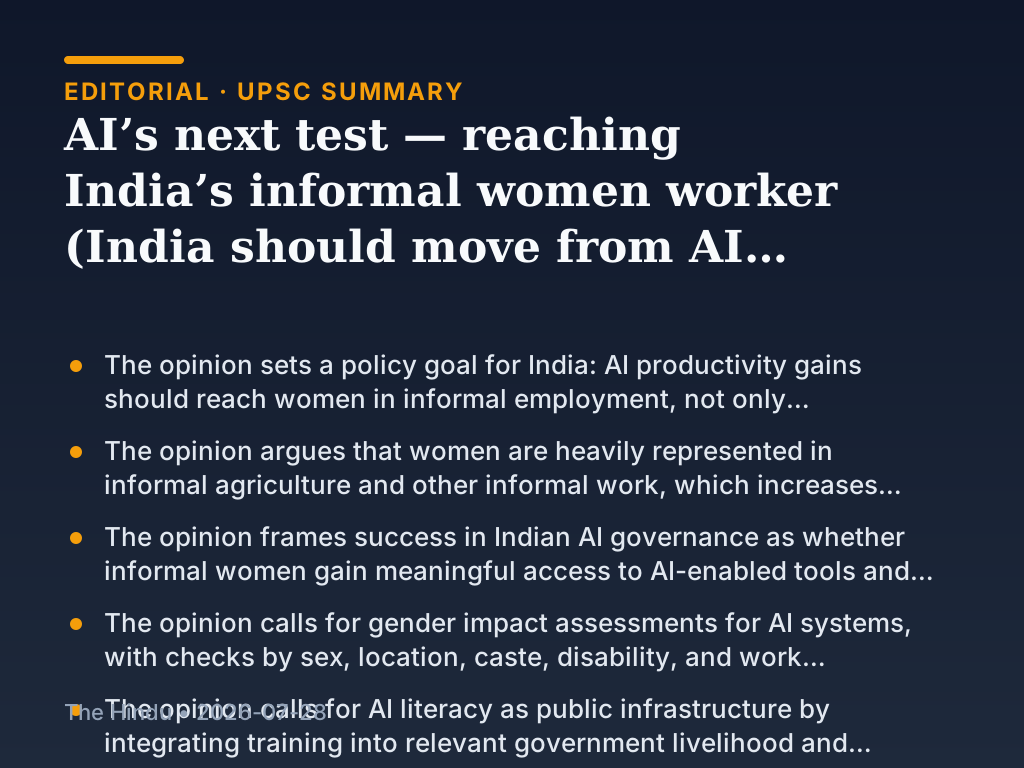
What happened: Indian AI governance is being assessed through outcomes for informal women workers
An opinion piece in The Hindu argues that India’s AI-driven productivity gains should be broadly shared and must reach women in informal employment. The opinion warns that if Indian AI systems are designed, trained, tested, and governed without gender-responsive safeguards, AI can exclude women and can amplify stereotypes, discrimination, and forms of digital violence.
Background and earlier position: India’s AI capacity-building and governance baseline
The opinion points to existing Indian AI initiatives and governance starting points, including IndiaAI Mission and BHASHa Interface for India (BHASHINI). It also cites the AI Governance Guidelines released in late 2025 as a governance baseline for how AI should be handled in India. The implied earlier focus is on building AI capacity and applying broad governance directions, rather than measuring success through gender-specific inclusion outcomes for informal women.
What changed now: the “next test” is measurable gender-inclusive outcomes
The opinion argues that India’s AI deployment should be assessed on whether informal women gain meaningful access to tools and opportunities enabled by AI. The opinion’s success yardstick moves beyond aggregate AI indicators and frames success as outcomes by 2047. The opinion identifies women in informal agriculture, home-based work, self-help group participation, and platform-mediated work as groups whose access and safety should improve as AI scales.
Related current affairs
- IndiaAI Mission workshop on AIKosh discusses strengthening India’s AI-ready data ecosystem
- BHASHINI Division (Digital India) Organises BHASHINI SANGAM Workshop in Nepal to Strengthen Language AI Collaboration
- Vice President launches ‘Gnani Artha’ sovereign AI stack (Evon 3.3 and Plexus)
- ABDM and responsible, evidence-based AI use in healthcare; AIKosh and IndiaAI Mission
- Government initiatives to support AI-led innovation in pharmaceuticals and improve access to data
- MeitY partners with PhonePe to support PM GatiShakti using granular data intelligence