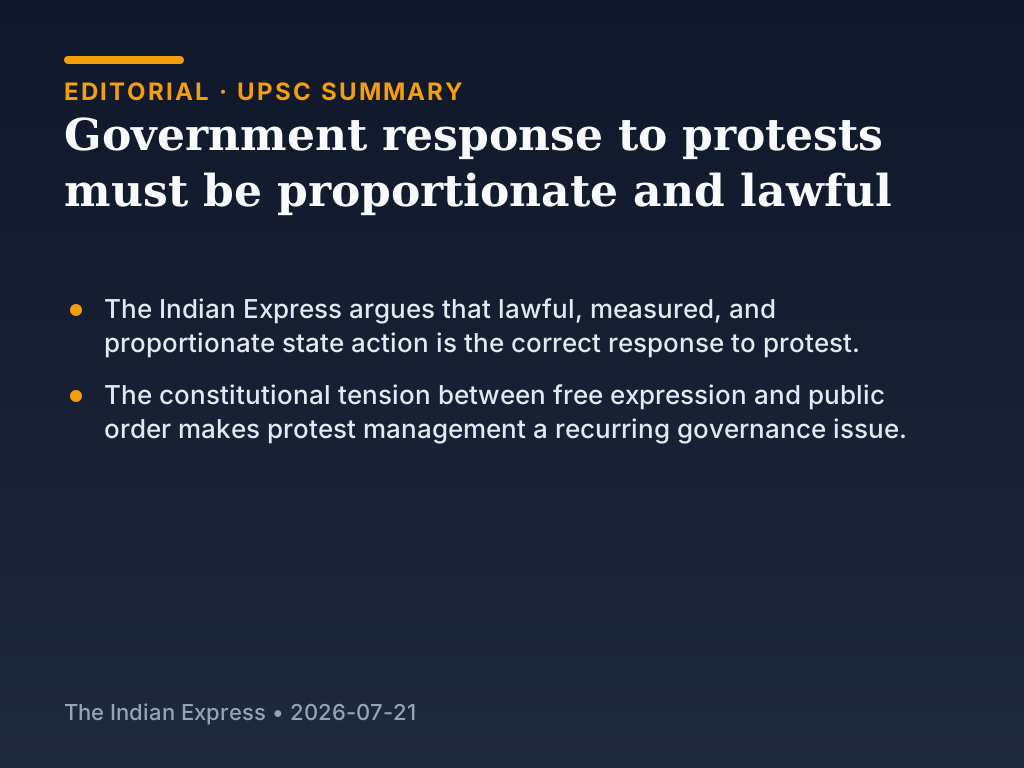
The Indian Express argues that state response to protest must be lawful, measured, and proportionate. Democratic dissent should not be treated as a security emergency by default, even when protest creates legitimate public-order concerns.
The core claim is that government legitimacy is strengthened when restraint matches the seriousness of the threat. The argument rejects panic and excessive repression as a response to political mobilisation, and it warns against turning a political problem into an outright security crackdown.
Why the issue matters
Protest management sits at the intersection of constitutional rights, public order, and administrative discretion. For UPSC, the issue connects state power with civil liberties, police accountability, and the principle that coercive force must remain necessary, proportionate, and legally grounded.
Mains dimensions
A balanced answer can discuss four linked ideas: the constitutional protection of democratic dissent; the state's duty to maintain public order; the need for calibrated policing; and the risk that excessive force can deepen mistrust and weaken legitimacy.
Related current affairs
- The right to protest and the limits of police power
- At CPI’s resurrected Jantar Mantar stage, the chants of violence and defiance
- At CJP’s resurrected Jantar Mantar stage, the protests of violence and defiance continue
- Protesters’ right to protest is protected, but can be regulated
- Dismantling the protest: What the law says (content block accompanying the main Law explainer)
- Supreme Court verdicts say the state must preserve life during an indefinite hunger strike