What happened
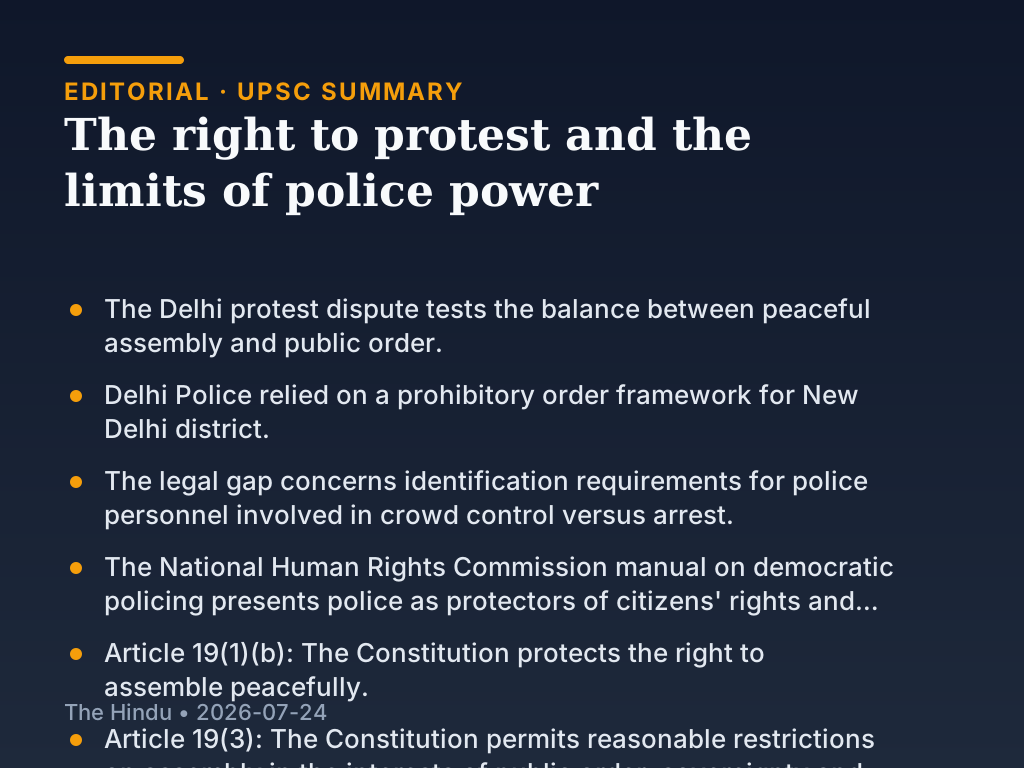
Police action against a 'Chalo Sansad' protest march at Jantar Mantar in central Delhi has revived a core constitutional question: how should a democracy police dissent? The incident matters for UPSC because it sits at the intersection of Article 19, public order, police accountability, and proportional use of force.
The protest reportedly led to tear gas use and lathi charges. The same event also triggered reported temporary Metro closures and disruption of mobile connectivity, showing how quickly a public-order issue can widen into a broader civil-liberties concern.
Constitutional and legal background
The Constitution protects the right to assemble peacefully under Article 19(1)(b). That right is not absolute. Article 19(3) permits reasonable restrictions in the interests of public order, sovereignty and integrity of India, and other constitutionally recognized grounds.
Related current affairs
- Dismantling the protest: What the law says (content block accompanying the main Law explainer)
- Protesters’ right to protest is protected, but can be regulated
- Supreme Court verdicts say the state must preserve life during an indefinite hunger strike
- Implementation of new criminal laws (BNS, BNSS, BSA) and capacity building for e-governance in criminal justice
- At CJP’s resurrected Jantar Mantar stage, the protests of violence and defiance continue
- At CJI’s resurrected Jantar Mantar stage, the protesters of violence and dissent