What happened: NCERT Political Science textbook committee reconstitution and neutrality statements
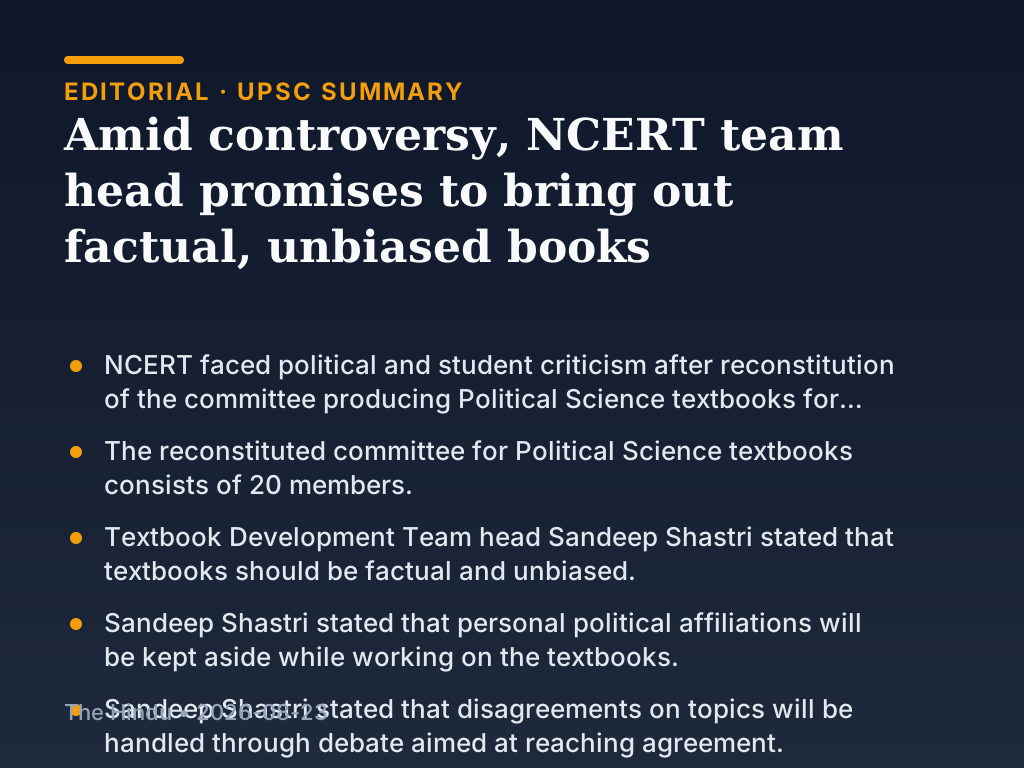
NCERT faced political and student criticism after the reconstitution of the committee responsible for producing Political Science textbooks for Classes 11 and 12. Opposition parties and student groups questioned the neutrality of the newly formed committee of 20 members, with allegations that some members have links to RSS-affiliated organisations and related bodies.
Textbook Development Team (TDT) head Sandeep Shastri stated that the goal is to create factual, unbiased textbooks. Shastri described the team as composed of subject experts and said personal political affiliations will be kept aside while the textbooks are being developed.
Sandeep Shastri also stated that disagreements on topics will be handled through debate aimed at reaching agreement. The discussion around neutrality also included reported concerns about committee membership perceptions and the balance between newer viewpoints and older curricular material.
A further allegation raised in the controversy is that at least four TDT members are described as having links with BJP/RSS or ABVP. Another TDT member argued that political identity should not influence academic discussion within the group and that contemporary perspectives should be incorporated rather than removing older material.
Background and earlier position: textbook committees as an academic-ethics issue
Related current affairs
- Govt. is pushing RSS agenda in textbooks, alleges Opposition (detailed opposition quotes)
- Education Minister marks NCERT’s 66th Foundation Day; highlights NEP 2020, curriculum frameworks and multilingual textbooks
- RSS-linked academics in NCERT textbook panel
- MoE: HEIs’ progress in NIRF ranking and education quality initiatives
- NCERT granted Institution Deemed to be University status
- NEP 2020/NCF-SE 2023: CBSE–NCERT Computational Thinking & AI curriculum for Classes III–VIII (from 2026-27) and grade 9–12 finalized