What happened (core idea about “family” framing)
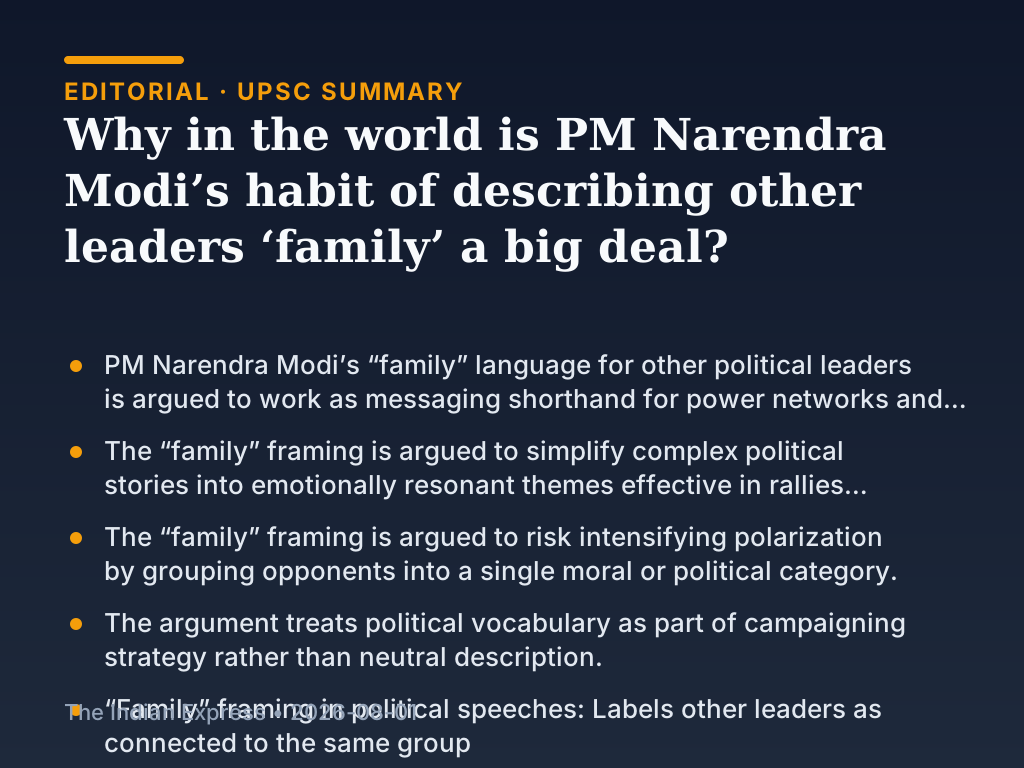
The discussion centres on PM Narendra Modi’s recurring practice of describing other political leaders as part of a “family” or connected group. The argument treats “family” language as a political shorthand that signals power networks, favoritism, and narratives linked to dynastic politics and corruption allegations. The claimed effect is that the label is easy to repeat and easier for voters to remember in rallies and mass media.
Background and earlier position (how political labels shape voter interpretation)
In democratic elections, political communication often relies on simple labels to help voters quickly interpret complex issues. The central background claim is that political vocabulary is not always neutral description; it can function as a tool of campaigning that guides how voters think about legitimacy, corruption, and who benefits from governance.
What changes in the present context (why repetition is treated as consequential)
The present argument is about cumulative impact. Repeated use of “family” framing is said to fix an opponent’s position inside a dominant narrative about networks and favoritism. The same framing is also argued to reduce nuance by placing opponents into one moral or political category, which can increase polarization.
Related current affairs
- On dignity in political discourse
- Are traditional parties unable to understand the grammar of Gen Z politics?
- Counting best bets: Congress presses for early talks with Samajwadi Party
- In Modi’s outreach to Gen Z, parents are the key target
- DMK showdown / Bilingual or divisive messaging? (block header visible)
- Why the saffronarivar couldn’t hear the young