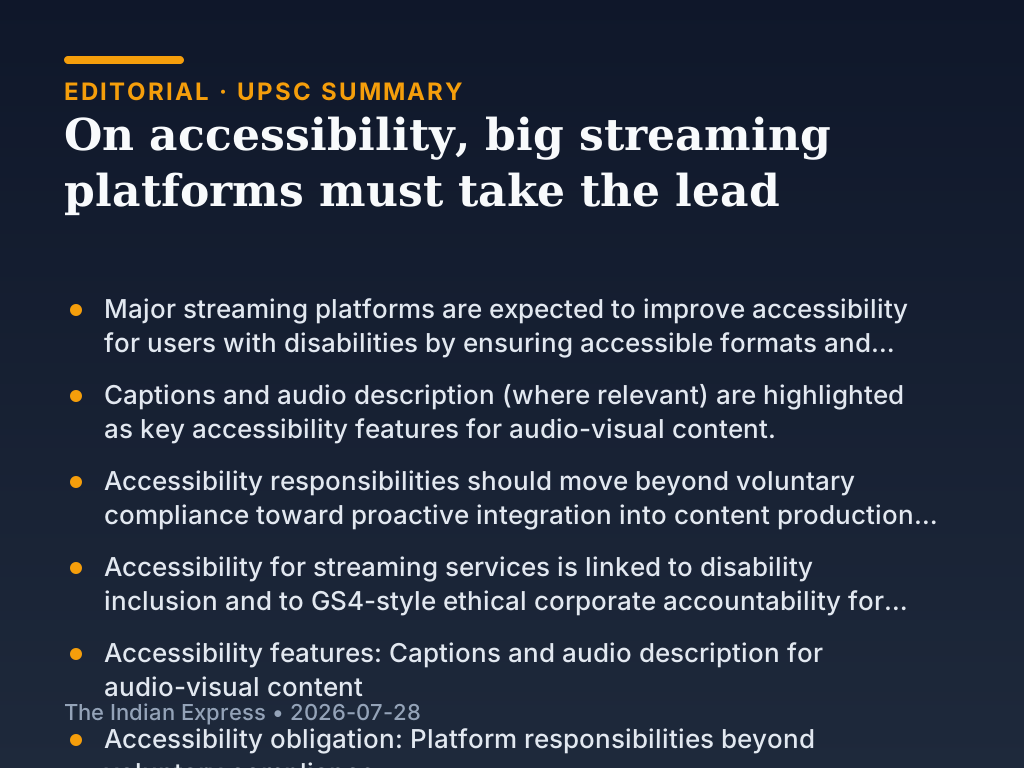
Major streaming platforms are urged to improve accessibility for users with disabilities by making accessible formats and features a core part of content production and distribution. The main claim is that accessibility should not remain optional or be treated only as a late-stage fix after barriers appear.
Actor and action (platform-led accessibility responsibilities)
The opinion urges large streaming platforms to take leadership in accessibility. The expected action is to ensure that streamed content is delivered in accessible formats and with accessible features, instead of relying primarily on voluntary compliance or on user complaints to trigger improvements.
The opinion highlights practical accessibility features for audio-visual content:
Captions (text that displays spoken dialogue and important audio cues) where relevant.Audio description (spoken narration describing key visual actions) where relevant.Accessible content delivery (delivery methods and features that allow users with disabilities to access content effectively).
Background and earlier position (why voluntary compliance alone is limited)
Related current affairs
- DIBD (Digital India BHASHINI Division) and NITI Aayog sign SoI to advance multilingual AI for inclusive governance
- Three Sanchar Mitras selected as ITU Generation Connect Youth Envoys (2026–2030)
- ADIP, SIPDA-related disability components, and skill/education support for persons with disabilities (including CDEIC)
- Reclaiming footpaths, taking cities back from cars
- BRICS Women Ministerial Meeting Concludes in Kochi