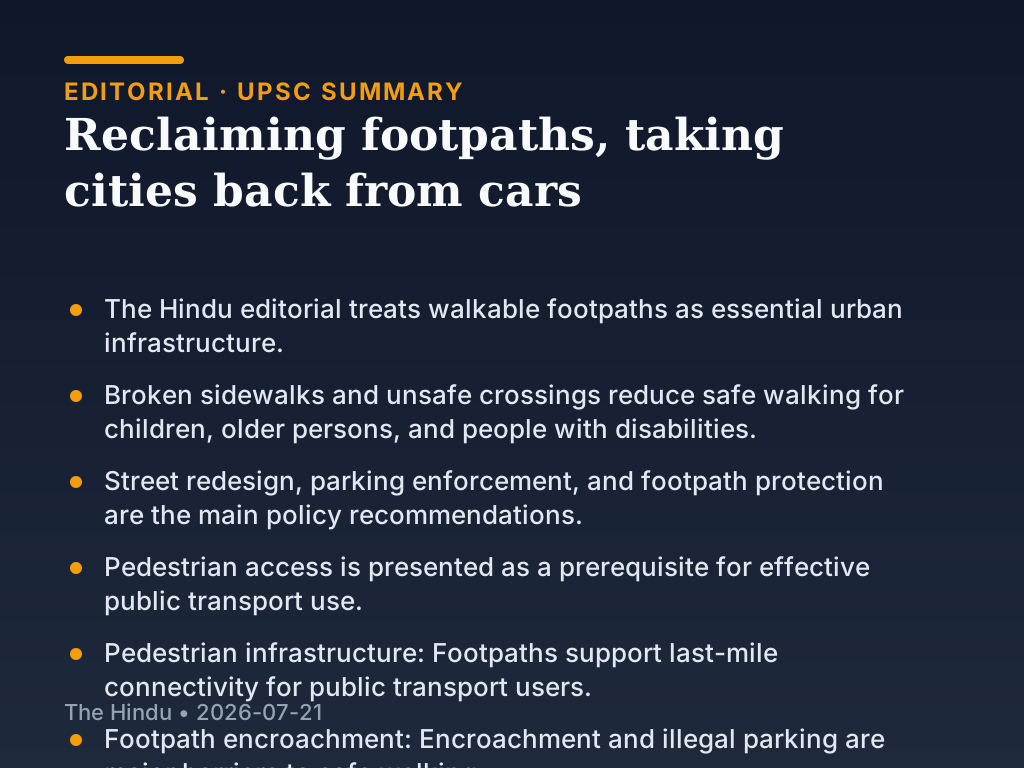
Indian cities are being designed too much for cars and too little for pedestrians. The Hindu editorial argues that walkable footpaths are a basic urban necessity because they shape safety, accessibility, and everyday mobility for people who walk, cycle, or use public transport.
Broken footpaths, blocked sidewalks, unsafe crossings, and weak enforcement create a hostile urban environment for children, older persons, and people with disabilities. Poor pedestrian infrastructure also reduces the usefulness of public transport because last-mile access becomes difficult.
The Hindu calls for a mobility shift in city planning. It supports redesigning streets for people first, enforcing parking rules, protecting footpaths from encroachment, and making city spaces more inclusive and livable.
Pedestrian infrastructure should not be treated as a decorative add-on. It should be treated as an essential public service and a condition for an equitable urban environment.
Why this matters for UPSC
The issue links directly to urban governance, road safety, and social justice. It can support Mains answers on inclusive cities, non-motorised transport, universal accessibility, and the role of urban local bodies in maintaining public space.
Related current affairs
- DDA plans over 20 meetings on master plan implementation
- DDA to enforce land pooling via town planning schemes
- NHAI and National Road Safety Board deliberate on strengthening road safety on National Highways
- Technology-driven governance and regulatory simplification under MPD-2047 (GIS, online approvals, negative list)
- Heritage conservation and redevelopment of Delhi’s cultural core under MPD-2047
- Delhi Master Plan 2047 (MPD-2047) unveiled as roadmap for Viksit Delhi and Viksit Bharat 2047